Why Is My Water Heater Leaking From the Bottom?
Quick answer
A water heater leaking from the bottom is usually caused by a failed drain valve, a leaking T&P relief valve, loose fittings, condensation, or a corroded tank shell. A leak from a valve or fitting is usually repairable. Water coming from the tank shell itself, especially past 10 years old, usually means it is time to replace it.
Key takeaways
- The most common cause is a failed drain valve. Plumbing companies commonly report repair costs of about $100 to $250 for that valve, versus about $1,000 to $3,500 or more for full tank replacement.
- Water heater tanks are commonly kept at a maximum of 140 to 145 degrees Fahrenheit, and T&P relief valves are built to discharge at around 210 degrees or 150 psi of tank pressure.
- Most conventional tank water heaters last around 10 years, and Rheem recommends starting replacement planning around that age. A leak from the tank shell itself at that age is a strong signal to replace rather than repair.
- The EPA says mold can begin growing on wet subfloor, drywall, or carpet padding within about 24 to 48 hours of sustained moisture, so drying the area fast matters as much as fixing the heater itself.
- Water damage and freezing caused 22.6 percent of homeowners insurance claims in 2023, with an average claim severity of $15,400, according to the Insurance Information Institute, but the water heater unit itself is usually not covered unless the policy includes equipment breakdown coverage.
On this page
- Is It Dangerous? What to Do Right Now
- Why Is a Water Heater Leaking From the Bottom? The 6 Most Common Causes
- How Do I Find the Exact Source of the Leak?
- Can You Keep Using a Water Heater That's Leaking a Little?
- Should You Repair or Replace It? Age and Leak Location Decision Table
- How Much Does It Cost to Repair or Replace a Leaking Water Heater?
- What Water Damage Can a Leaking Water Heater Cause to Your Floor or the Room Below?
- How to Dry Out the Area and Avoid Mold After a Water Heater Leak
- Will Homeowners Insurance Cover the Damage From a Leaking Water Heater?
- When to call a professional
- Frequently asked questions
Is It Dangerous? What to Do Right Now
A slow drip from a valve is rarely an emergency. Act immediately if you smell gas, see water near an outlet or the breaker panel, or the water is rising fast.
Turn off power and water right now if:
- You smell gas near the unit.
- Water is touching or near an electrical outlet or the breaker panel.
- The water is rising quickly rather than dripping slowly.
- The water is coming from the tank body itself, not a valve or fitting.
You likely have time to plan if:
- It is a slow drip from a valve or fitting.
- There is no gas smell.
- There is no electrical hazard nearby.
If any item in the first list applies, follow this sequence:
- Gas units: turn the gas control knob to off.
- Electric units: shut off the breaker for the water heater.
- Close the cold water shutoff valve on top of the tank.
- If water is near outlets or the panel, do not touch them. Shut off power at the main breaker instead.
Why Is a Water Heater Leaking From the Bottom? The 6 Most Common Causes
Bottom leaks almost always trace to one of six things: a failed drain valve, a leaking T&P relief valve, loose or corroded fittings, harmless condensation, a heating element gasket on electric units, or corrosion inside the tank itself.
If you are not sure the leak is specifically from the bottom of the tank rather than the top or a nearby pipe, it helps to confirm that first, since a top leak can run down the side of the tank and pool at the base.
If your appliance is a wall-hung combi boiler rather than a US-style storage tank water heater, the common causes are different, since pressure relief valve and circuit board faults are more common on boilers.
Drain Valve Leak (Most Common)
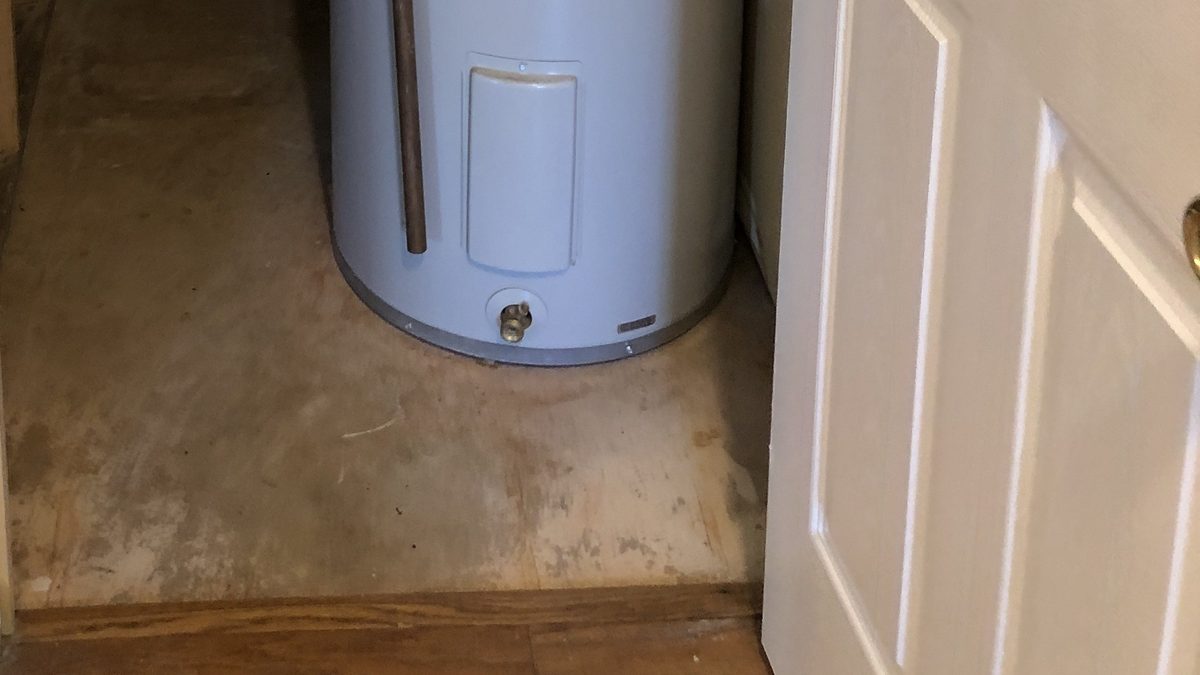
How to tell: a drip or steady leak comes from the small plastic or brass valve near the bottom of the tank, often right after you flush the tank or bump the valve.
The fix: tighten the valve, replace its washer, or swap the valve itself. This is usually a DIY job or a low-cost call to a plumber for a drain valve leak.
This is also the valve you use to drain water from the tank to flush out sediment, so a drip after closing it often just means a worn washer.
T&P (Temperature and Pressure) Relief Valve Leak
How to tell: water drips from the discharge pipe that runs down the side of the tank toward the floor, not from the tank body itself.
Manufacturers and plumbing codes generally cite about 140 to 145 degrees Fahrenheit as the operating ceiling before pressure related rupture risk rises, and T&P valves are built to discharge once the tank reaches around 210 degrees or 150 psi of pressure.
The fix: lift the valve's test lever briefly. If it will not reseat, or it keeps dripping afterward, the pressure relief valve needs replacement, not just tightening, since it is a safety device.
Loose or Corroded Fittings and Connections
How to tell: the wet spot is at a union, nipple, or hose connection, not the tank body itself.
The fix: tighten or replace the fitting, and check for corrosion or mineral buildup underneath it. Hard water speeds up this kind of corrosion around fittings and valves.
Condensation (Not a Real Leak)
How to tell: cold water fills the tank and condensation forms on the outside, common on new units or right after a cold snap. It disappears once the tank warms up.
The fix: wipe the tank dry and recheck it in a few hours before assuming you have a real leak.
Heating Element Leak (Electric Units Only)
How to tell: water collects at the base near where a heating element bolts into the tank, which means its gasket has failed.
The fix: replace the element gasket. Shut off power to the unit and drain the tank first.
Internal Tank Corrosion (Cracked or Rusted Tank Shell)
How to tell: water weeps from the tank body or seam itself, not from any single component, often along with rust colored water.
The fix: this is not repairable. The tank has to be replaced, since a rusted and cracked tank bottom only gets worse over time.
What the Drain Pan and Discharge Pipe Are Actually For
The T&P discharge pipe and drain pan are code requirements, not optional extras.
Under the 2018 International Plumbing Code section 504.6, the discharge pipe must end through an air gap in the same room as the water heater. It must terminate no more than 6 inches above the floor, pan, or drain, according to the ICC's summary of water heater safety requirements.
Where a drain pan is required, it must be at least 1.5 inches deep and drain through a pipe at least 0.75 inch wide, according to up.codes' summary of the required pan rule. The requirement is based on where damage could occur, not just attics, as many homeowners assume.
Bradford White's installation and operation manual recommends inspecting the anode rod periodically, about every 2 years, and draining the tank at least once a month through the drain valve until the water runs clear, to help prevent sediment buildup and extend tank life. Exact inspection intervals can vary by model, so check the manual for your specific water heater.
How Do I Find the Exact Source of the Leak?
Dry every surface with a towel, then watch closely for a few minutes: check the drain valve, follow the T&P discharge pipe, check each fitting, and look at the tank seam itself before assuming the worst.
- Dry and inspect the drain valve at the bottom of the tank.
- Follow the T&P discharge pipe down from the valve to see if water is coming from there.
- Check every fitting, union, and hose connection for a wet spot.
- Look closely at the tank seam and body itself for weeping or rust colored water.
- Note whether water reappears at one exact spot, which points to a component, or shows up as generalized moisture, which points to condensation.
Rule Out Condensation First
Wipe the entire tank dry and recheck it in about an hour, especially if it was just filled with cold water or the room just went through a temperature swing.
Could Water Be Running Down From a Top Leak?
Water pooling at the base can actually be running down from a fitting or the cold water inlet at the top of the tank. If drying the top and sides stops the pooling below, see our guide on a water heater leaking from the top.

Can You Keep Using a Water Heater That's Leaking a Little?
You can usually keep using it briefly if the leak is a slow drip from a valve or fitting, there is no gas smell, and there is no electrical hazard. A leak from the tank shell itself means the tank is failing and should not be relied on.
A component leak will not fix itself, and it can get worse over hours or days as fittings loosen further or a valve wears out completely. Plan a repair soon rather than ignoring it.
Should You Repair or Replace It? Age and Leak Location Decision Table
If the leak is from a component, such as a valve, fitting, or gasket, it is almost always repairable. If it is from the tank shell itself, or the unit is already past its typical service life, replacement is the safer call.
| Leak location | Tank age | Verdict |
|---|---|---|
| Valve, fitting, or gasket leak | Any age | Repair |
| Tank shell or seam leak | Any age | Replace (not repairable) |
| Component leak | Near or past 10 years | Consider replacing anyway, since repair cost may not be worth the remaining useful life |
| Component leak | Still under manufacturer warranty | Contact the manufacturer or installer before paying out of pocket |
Most conventional tank water heaters last around 10 years, and Rheem recommends beginning replacement planning around that age. A leak from the tank shell on a unit already at or past 10 years is a strong signal to replace rather than repair.
What If the Water Heater Is Still Fairly New?
Check the tank and parts warranty, which commonly runs 6 to 12 years. A leak on a newer unit may be a manufacturer or installer issue covered under warranty rather than a repair you pay for yourself.
For the full decision framework beyond this summary table, see our guide on whether to repair or replace a water heater.
How Much Does It Cost to Repair or Replace a Leaking Water Heater?
Component repairs typically run far less than replacement: expect roughly $100 to $350 for a valve or fitting repair versus $1,000 to $3,500 or more for full replacement, according to industry reported pricing.
| Repair or replacement item | Typical reported cost range |
|---|---|
| Drain valve replacement | $100 to $250 |
| T&P relief valve replacement | $150 to $350 |
| Fitting or connection repair | $100 to $300 |
| Full tank replacement (parts and labor) | $1,000 to $3,500 or more |
These figures are what plumbing companies commonly report, not a guarantee for your specific job. Get a local quote before deciding, especially if the unit is old enough that replacement may make more sense than repair.
If the leak has already reached your flooring or subfloor, drying and repairing that damage is a separate cost. See our guide on what water damage restoration costs for what that side of the job typically runs.
What Water Damage Can a Leaking Water Heater Cause to Your Floor or the Room Below?
A 40 to 50 gallon tank can empty its full volume onto the floor if the tank shell fails, and even a slow drip can soak subfloor and drywall over several hours if it goes unnoticed.
In an upstairs unit or condo, the first sign is often a stain or sag on the ceiling below, the same warning sign that shows up when a bathtub leaks through the ceiling instead of a water heater.
Standard residential tank capacity is 40 to 50 gallons, so a full tank failure is a real flood, not just a puddle.
- Garage, basement, or closet installation: pooling water, warped flooring, and a musty smell developing over the following day or two.
- Upstairs, condo, or multi-unit installation: a ceiling stain or sag in the room or unit below, peeling paint, or a neighbor reporting a leak from above.
If You're in an Upstairs Unit, Condo, or Apartment
The ceiling below is often the first visible sign of a leak you have not noticed yet in your own unit. In a shared building, the damage below may involve the building's insurance or HOA as well as your own, so document what you find and notify the affected unit or building management quickly.
How to Dry Out the Area and Avoid Mold After a Water Heater Leak
Wet vac or mop up standing water right away, then run fans and a dehumidifier on the area. The U.S. EPA says mold can begin growing on wet subfloor, drywall, or padding within about 24 to 48 hours of sustained moisture, so speed matters.
- Shut off the water and power to the unit, following the safety steps above.
- Remove standing water with a wet vac or towels rather than letting it evaporate on its own.
- Run fans and a dehumidifier on the wet area.
- Lift or pull back baseboards and flooring edges if they have been wet for more than a few hours, so the material underneath can dry too.
- Watch for a musty smell or discoloration over the next 1 to 2 days.
This step matters as much as fixing the heater itself. Most water heater repair guides do not mention drying or mold timing at all, but the water that already reached your floor does not wait for the plumber.
Will Homeowners Insurance Cover the Damage From a Leaking Water Heater?
Sudden, accidental damage, like a tank suddenly failing and flooding a room, is typically covered. Gradual leaks, lack of maintenance, and the cost of the water heater unit itself usually are not, unless the policy has added equipment breakdown coverage.
Homeowners insurance generally covers water damage that is sudden and accidental but excludes damage from a gradual leak, lack of maintenance, or ordinary wear and tear, according to the Insurance Information Institute.
Water damage and freezing caused 22.6 percent of homeowners insurance claims in 2023, with an average claim severity of $15,400, according to the Insurance Information Institute.
- Usually covered: sudden tank failure and the resulting floor, ceiling, or drywall damage.
- Usually not covered: the water heater unit itself, unless you have equipment breakdown coverage; damage from a leak you knew about and ignored; gradual seepage over time.
For the full breakdown, see our guide on whether a water heater leak is covered by homeowners insurance, and how insurers treat a comparable case in our guide to how insurance treats a burst pipe.
This is general information. Check your own policy or talk to your insurance agent about what your specific coverage includes.
When to call a professional
Call a plumber or restoration professional based on these thresholds, not on gut feeling.
- Call now, the same day, if the leak is coming from the tank shell or seam itself rather than a component like a valve or fitting.
- Call now if the unit is roughly 10 years old or older and leaking, since that is at or past the typical service life for a conventional tank.
- Call now, and treat it as an emergency, if you smell gas, water is touching or near an outlet or breaker panel, or the water is rising quickly.
- Call a restoration professional if water has been sitting on flooring, subfloor, or has reached the ceiling below for more than a few hours, since mold risk begins within about 24 to 48 hours.
- Call a restoration professional if you see a ceiling stain, sag, or peeling paint in the room below an upstairs unit or condo.
- You likely do not need to call anyone tonight if it is a slow drip from a valve or fitting, there is no gas smell or electrical hazard, and you can shut off the water and power and plan a repair in the next day or two.
Frequently asked questions
What if my water heater is still fairly new and leaking?
Check the tank and parts warranty, which commonly runs 6 to 12 years. A leak on a newer unit may be a manufacturer or installer issue rather than something you should have to pay for yourself. Contact the manufacturer or the company that installed it before hiring an outside repair, since doing your own repair first can sometimes affect the remaining warranty coverage.
Is it safe to shower or run hot water while the water heater is leaking?
It is usually fine for a slow drip from a valve if there is no gas smell and no electrical hazard nearby. Avoid it if the leak is from the tank shell itself, since running more hot water adds pressure and volume to a tank that is already failing, which can make the leak worse.
Does shutting off the water heater stop the leak completely?
Turning off the cold water supply valve stops new water from entering the tank, but water already inside can still drain out through the leak until the tank empties. To stop it completely, shut off the main water supply to the tank and drain it fully through the drain valve.
Can I dry the area myself before a professional arrives?
Yes. Wet vac up standing water, run fans and a dehumidifier, and lift wet baseboards or flooring edges if it is safe to do so. This buys time and limits mold risk while you wait for a plumber or a restoration professional to look at the area.
Do I need a permit to replace a water heater?
Many jurisdictions require a permit and inspection to replace a water heater, especially for gas units, since the work involves gas lines, venting, or electrical connections. Check with a licensed plumber or your local building department before replacing one yourself to avoid problems with inspections or resale later.
How long should a new water heater last after replacement?
Most conventional tank water heaters last around 10 years with normal use. Routine maintenance, such as checking the anode rod every couple of years and draining the tank monthly to clear sediment, can help a new unit reach the higher end of that range rather than failing early.
Sources
- ICC / Building Safety Journal, "Water Heater Safety in the International Codes" (citing IPC 504.6 / IRC P2804.6.1)
- up.codes, "Required Pan" (residential plumbing code, drain pan requirements)
- Insurance Information Institute (Triple-I), homeowners insurance and water damage guidance
- Insurance Information Institute, Facts + Statistics: Homeowners and Renters Insurance
- Rheem, "5 Signs Your Water Heater Is Going Bad and What to Do About It"
- Bradford White, Service and Installation/Operation Manuals (anode rod and maintenance intervals)
- U.S. EPA, A Brief Guide to Mold, Moisture and Your Home
- Industry-reported plumbing repair and replacement cost ranges (multiple contractor sources; not independently verified against a national pricing database)