What to Do Immediately When Water Is Dripping From Your Ceiling
Quick answer
If water is dripping from your ceiling, turn off the main water valve if the drip is constant, place a bucket underneath, and move valuables away. Check whether rain, water use, or a neighbor's leak started it. A sagging or bulging ceiling is a safety hazard. Call a professional within a few hours if you cannot find the source.
Key takeaways
- Mold can start growing within 24 to 48 hours of water exposure, so drying the area fast matters.
- Constant dripping with no rain or recent water use usually points to a pressurized supply line or appliance leak, not the roof.
- Water can travel 4 to 6 feet sideways along framing before it drips, so the real source may be far from the drip point.
- A small, stable bulge can sometimes be drained safely, but a heavy or spreading sag, or water near a light fixture, means stop and call a professional.
- Most homeowners insurance covers a sudden, accidental leak reported quickly; a slow leak left running for weeks is usually not covered.
On this page
- What to Do in the First 15 Minutes
- Is It Safe? Sagging Ceiling and Electrical Hazards
- Where Is the Water Coming From? Four Possible Ceiling Leak Sources
- Does the Type of Water Matter? Clean, Gray, or Black Water
- How Long Before Mold Starts Growing?
- Should I Poke or Drain a Water-Filled Bulging Ceiling?
- When Should I Call My Insurance Company?
- How Much Will Ceiling Water Damage Repairs Cost?
- When to call a professional
- Frequently asked questions
What to Do in the First 15 Minutes
Turn off the main water valve right away if the drip is constant. Move valuables out from under the leak, place a bucket to catch the water, and cut power to any wet light fixtures at the breaker.
Water-saturated drywall can lose strength fast. Do not poke a large bulging area, and stay out of an attic with active water overhead.
- If the drip is constant and not tied to rain or water use, find the main shutoff valve and turn it clockwise if it is a gate valve, or sideways if it is a ball valve. Our guide on finding the main water shutoff valve covers every common location if you are not sure where yours is.
- Move electronics, furniture, and documents 4 to 6 feet clear of the drip, since water travels sideways along framing before it falls.
- Place a bucket or tarp under the drip and check it regularly so it does not overflow.
- Cut power at the breaker to any ceiling lights, fans, or outlets in the wet area.
- Do not poke, drill, or press on a large or sagging bulge, which may be heavy enough to bring part of the ceiling down.
- Open a window or run a fan to cut humidity while you work.
If the drip is constant and traces back to a supply pipe, our full step-by-step guide for a burst pipe covers the complete emergency response.
Do not:
- Ignore a slow, steady drip. Even a light drip can lead to mold and structural damage within 48 hours.
- Push on or try to repair a sagging ceiling yourself.
- Walk into an attic with water actively dripping or pooling above you.
- Wait to call a professional if the drip will not stop or you cannot find the source.
Is It Safe? Sagging Ceiling and Electrical Hazards
A sagging, heavily bulging, or soft ceiling is a structural emergency. Water near a light fixture or wiring is an electrical hazard. If you see either, stop working and call a professional.
Wet drywall and insulation lose load-bearing strength as they soak up water, and a ceiling can fail with little warning. The risk is highest over bathrooms, kitchens, and laundry rooms, where plumbing already runs through the structure.
Bathroom outlets must carry GFCI protection under the National Electrical Code, which cuts power in milliseconds if a device meets water (U.S. Consumer Product Safety Commission). A light fixture or exposed wiring may not have that protection, so cut power at the breaker instead of touching anything wet.
| Condition | Action | Reason |
|---|---|---|
| Small soft spot, ceiling still feels mostly firm | Place a bucket below; careful, light draining may be acceptable | Low collapse risk with a contained, light amount of water |
| Visible sag, drywall feels heavy or wet to the touch | Place buckets but do not press on it; call a restoration company | Trapped water adds enough weight to raise collapse risk |
| Heavy sag, drywall feels mushy, soft, or is cracking | Call a professional immediately and stay out from underneath | Collapse can happen at any time once drywall is this saturated |
| Water near a light fixture, fan, or exposed wiring | Cut power at the breaker immediately; do not touch wet areas | Water conducts electricity and raises shock risk |
Where Is the Water Coming From? Four Possible Ceiling Leak Sources
The timing, location, and color of the stain point toward the likely source: the roof, plumbing or an appliance, HVAC condensation, or an upstairs neighbor. Use the table below to narrow it down.
Water does not always drip straight down from where it enters. It can travel 4 to 6 feet sideways along framing and insulation first, and in a multi-story home the real source can be an entire room away from the visible drip point.
| When It Happens | Where & Pattern | Stain Color | Likely Source | Next Step |
|---|---|---|---|---|
| Only during or after rain | Near the roofline, outer walls, or a vent or chimney | Brown or yellow halo | Roof leak | Check the attic for wet insulation or light through the decking |
| Only when a fixture runs (shower, toilet, washer) | Below a bathroom, kitchen, or laundry room | Clear water | Plumbing fixture or supply line | Shut off water to that fixture and see if the drip stops |
| Constant, day and night, rain or not | Near a water heater, furnace, or air conditioner | Clear, colorless water | Pressurized supply line or appliance failure | Check the water heater and AC condensate line; call a plumber or HVAC technician |
| Worse on cold nights or humid days | Widespread, speckled pattern, often in an attic | Rust on nail tips | Condensation from HVAC or attic humidity | Check indoor humidity, attic insulation, and ductwork for sweating |
| Tied to a neighbor's shower or appliance use | In a condo or apartment, below the unit above | Clear water, sometimes soapy | Upstairs neighbor's leak | Photograph it and notify the neighbor and landlord in writing |
If you already know the drip is from an upstairs tub or shower, our guide to a bathtub leaking through the ceiling walks through the specific causes and fixes for that situation.
Does the Type of Water Matter? Clean, Gray, or Black Water
Yes. The water category affects your health risk and how cleanup should happen. Most ceiling leaks start as Category 1, clean water, but can turn into Category 2, gray water, if left sitting for 24 to 48 hours.
- Category 1, clean water: comes from a sanitary source, such as a broken supply line, rainwater, or a tub overflow without contaminants. It carries low health risk at first, but can still grow mold if not dried within 24 to 48 hours (IICRC S500 Standard).
- Category 2, gray water: carries contamination that can cause illness, such as washing machine or dishwasher discharge, or a toilet overflow with urine. Standing gray water for more than 24 hours raises the health risk (IICRC S500 Standard).
- Category 3, black water: grossly contaminated water, usually sewage. It is rare from a ceiling leak but possible after a sewage backup, and it requires licensed professional cleanup (IICRC S500 Standard).
Clean water that sits for 24 to 48 hours can develop microbial growth and get reclassified as gray water, which is one more reason drying the area quickly matters for both your health and your cleanup bill.
How Long Before Mold Starts Growing?
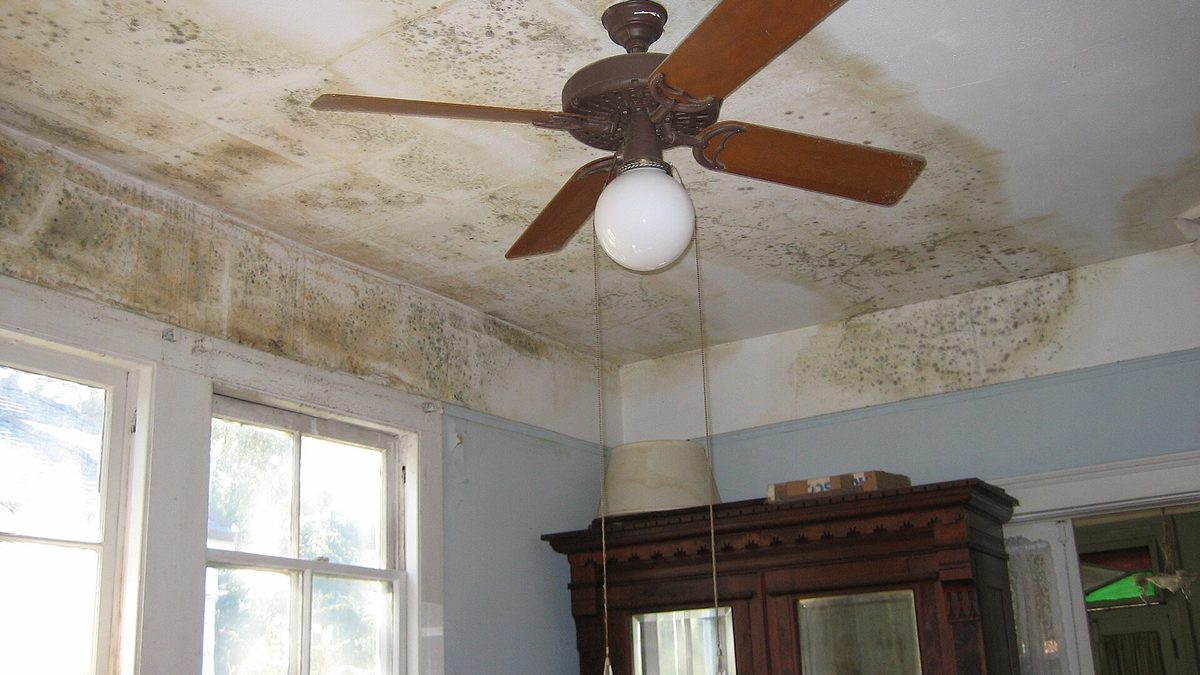
Mold can start colonizing wet drywall, insulation, and wood within 24 to 48 hours. Visible growth often shows up by 48 to 72 hours if the area is not dried (U.S. EPA, A Brief Guide to Mold, Moisture and Your Home).
Mold favors warm, dark, damp spots. Humidity above 60 percent and temperatures between 77 and 86 degrees Fahrenheit are ideal for it on porous material like drywall and insulation.
The clock starts the moment water touches the ceiling. Waiting several days to open things up or call a restoration company sharply raises both mold risk and the eventual repair cost.
This timing matters for your insurance claim too. A sudden, accidental leak that is reported and dried quickly is usually covered, while a slow leak left running for weeks is more likely to be treated as neglect.
Should I Poke or Drain a Water-Filled Bulging Ceiling?
A small, stable bulge with a slow drip can often be punctured safely if you use the right technique. A large, heavy, or fast-growing bulge should be left to a professional to avoid injury or a sudden collapse.
A bulge means water is trapped above the drywall and pressing down. If the material still feels firm rather than mushy, the weight is usually manageable enough to drain yourself.
| Bulge Condition | Drip Rate | Safe to Handle Yourself? | How to Drain It Safely |
|---|---|---|---|
| Small, stable bulge; drywall still feels firm | Slow, light drip | Yes, with caution | Place a bucket under the lowest point. Make a small hole there with a screwdriver, holding it lightly, and let gravity drain it. |
| Larger bulge; ceiling visibly sags when touched gently | Moderate or steady drip | Proceed with caution, or call a pro if unsure | Same approach, but have more buckets ready and stand to the side, not directly underneath. |
| Large, heavy bulge; drywall feels mushy or soft | Heavy drip or a small stream; water audibly moving inside | No, call a restoration company | A professional uses pumps or controlled drainage to prevent structural failure or injury. |
If the leak is actually coming from inside a wall, not the ceiling, read about what it means when you hear water dripping in a wall.
If you live below another unit and see water rising from your own floor instead, our guide to water coming up through the floor covers that version of the problem.
When Should I Call My Insurance Company?
Call your homeowners insurance company as soon as you can after you find the leak, ideally the same day. Report the likely cause and start taking photos right away.
A sudden, accidental leak, such as a burst pipe or storm damage, is usually covered when reported quickly. A slow leak left running for weeks is usually treated as neglect and denied (Washington State Office of the Insurance Commissioner). Our full breakdown of what homeowners insurance covers after a burst pipe goes through the details.
Some policies set a lower, separate limit for water damage. For example, a policy with a 500,000 dollar overall limit might carry only a 10,000 dollar water-damage limit, so check your own policy or call your agent.
- Call your insurer the same day, with your policy number ready.
- Take dated photos and video of the stain, any bulge, and damage below.
- Photograph the leak source if you can safely reach it.
- Keep receipts for tarps, buckets, or any temporary repair.
- Do not wait for an adjuster before drying the area; ask about limits, deductibles, and mold coverage when you call.
Flood damage from rising water outside the home needs separate coverage through the National Flood Insurance Program, not a standard homeowners policy.
How Much Will Ceiling Water Damage Repairs Cost?
Ceiling repair after a water leak typically costs 350 to 2,000 dollars, covering the drywall and ceiling work itself, not the cause of the leak.
A leaking bathroom ceiling commonly costs 350 to 2,000 dollars to repair, and a general ceiling-area repair averages 684 dollars, with a typical range of 300 to 1,100 dollars (American Family Insurance). Our water damage restoration cost guide breaks down pricing by room and severity.
That price does not include fixing what caused the leak. A plumbing repair, a section of new roofing, or an HVAC adjustment is a separate cost on top of the drywall work.
Mold remediation, if mold has already taken hold, adds further cost and should be quoted directly by the company doing the work.
When to call a professional
Call a professional the same day if the ceiling is sagging or heavily bulging, water is near a light fixture or wiring, or you cannot find the source after checking the obvious causes.
- The ceiling is sagging, bulging heavily, or feels soft and mushy.
- Water is dripping near a light fixture, fan, or exposed wiring.
- You smell mold or can see visible mold growth.
- The leak has been going on for more than 24 to 48 hours without being dried out.
- You cannot tell whether the source is the roof, plumbing, HVAC, or an upstairs neighbor.
- Water keeps dripping even after you shut off the main valve. Read why water may still drip after the main shutoff is closed for what that can mean.
Call your insurance company as soon as you can after discovering the leak. A sudden, accidental leak that is reported and dried quickly is usually covered, while one left running for weeks is usually treated as neglect.
Frequently asked questions
Can I dry out the ceiling myself, or do I need a restoration company?
A small area of wet drywall with clear water and no mold smell can often be dried with fans, dehumidifiers, and open windows within 24 to 48 hours. A larger area, visible mold, gray or black water, or a wet attic or wall cavity needs professional drying equipment to stay ahead of that same 24 to 48 hour clock.
Will my renters insurance cover a ceiling leak in my apartment?
Renters insurance typically covers water damage from a sudden, accidental event inside your own unit, such as your own appliance failing. It usually does not cover a leak from the unit above or the building structure. If the leak comes from upstairs, the landlord's building insurance or the upstairs tenant's renters insurance should cover it. Document everything with photos and a written notice.
The leak stopped after I shut off the main valve. Is it safe to turn the water back on?
No, not until the cause is identified. A leak that stops after you shut off the main valve points to a problem in the pressurized supply system, such as a burst pipe, a failed fixture seal, or an appliance malfunction. Turn the water back on only after a plumber has inspected and repaired the source, or the leak is likely to restart.
How do I find the main water shutoff valve?
The main shutoff is usually where the water line enters your home: a basement or utility room near the front foundation, about 3 to 5 feet from the entry point in colder climates, a garage, or an outside curb box marked 'Water.' It is typically a wheel-shaped gate valve that turns clockwise to close, or a lever-style ball valve that closes with a quarter turn.
I noticed the leak after hours. Should I wait until morning to call a plumber?
No. A constant drip wastes water and causes damage overnight, and many plumbers offer emergency service around the clock, often for a higher after-hours fee. In the meantime, shut off the main water valve and keep buckets under the drip. A roof leak or HVAC condensation is less urgent, but mold risk still rises with every hour, so call an emergency restoration company if the damage looks extensive.
What is the difference between an old water stain and an active leak?
A water stain is dried residue from a past leak that may already be fixed and dry. An active leak is water currently dripping or pooling. Both deserve attention: a dry stain can mean a slow leak ran undetected for a long time, which is a mold and structural risk, while an active leak needs an immediate response. Either way, a professional inspection rules out hidden mold or ongoing seepage.
My ceiling is wet but it has not rained in days and no one is using water. What could it be?
Constant dripping with no rain or water use usually means a pressurized supply line or appliance leak, such as a water heater or washing machine, or condensation where humid air meets a cold surface in the attic or ductwork. A slow roof leak from days ago can also take time to travel through framing. Check the attic, water heater, and air handler, and call a restoration company if it stays unclear.
Is dripping during humid summer weather condensation or a real leak?
Condensation is more likely if the dripping is widespread and made of many small droplets across a large area, shows up near an attic or ductwork with a big temperature swing, and eases on dry days. A real leak follows a single path to one low point and does not improve when humidity drops. A moisture meter held against the drywall will read noticeably higher over an active leak than over condensation alone.
Sources
- U.S. EPA, A Brief Guide to Mold, Moisture and Your Home
- U.S. Consumer Product Safety Commission, GFCI Protection Guidance
- IICRC S500 Standard and Reference Guide for Professional Water Damage Restoration
- Washington State Office of the Insurance Commissioner, Leaks, Water Intrusion and Mold
- National Flood Insurance Program, FloodSmart.gov
- American Family Insurance, How to deal with bathroom ceiling leaks