What to Do When a Pipe Bursts in Your Home
Quick answer
When a pipe bursts, shut off the main water valve immediately. It is usually in the basement, near the water heater, or in an exterior meter box. Cut power only if you can reach the breaker panel without stepping into water, then call a licensed plumber and dry everything within 24 to 48 hours, per the EPA.
Key takeaways
- Shut off the main water valve first. If you do not know where it is, check the basement or crawlspace, near the water heater, or an exterior meter box.
- Only shut off electricity yourself if you can reach the breaker panel without stepping into standing water; otherwise call your electric utility to cut power at the meter.
- The EPA says to dry wet materials within 24 to 48 hours of a leak, or mold is likely to start.
- Water damage and freezing caused 22.6% of homeowners insurance losses in 2023, with an average claim payout of $15,400, according to the Insurance Information Institute.
- Typical burst-pipe repair costs run about $400 to $2,000 based on contractor cost estimates; see our full cost guide for a room-by-room breakdown.
On this page
- What Should You Do in the First Few Minutes After a Pipe Bursts?
- Where Is the Main Water Shutoff Valve, and How Do You Turn It Off?
- Should You Turn Off the Electricity Too, and Is That Ever Unsafe to Do Yourself?
- What if You Cannot Find the Main Valve Fast Enough, or It Is Stuck?
- Is It Safe to Walk Into the Flooded Room, and What Should You Avoid?
- How Do You Remove the Standing Water and Start Drying Everything Out?
- What Should You Photograph or Document, and When?
- Will Homeowners Insurance Cover a Burst Pipe, and What Could Get a Claim Denied?
- What Is Different if the Pipe Burst Because It Froze?
- What if a Pipe Bursts in an Apartment or Rental Unit?
- When to call a professional
- Frequently asked questions
What Should You Do in the First Few Minutes After a Pipe Bursts?
Shut off the main water valve first, then the electricity if it is safe to reach, then call a plumber. Remove standing water and start drying while you document the damage for insurance, in that order.
- Shut off the main water valve.
- Shut off electricity to the area, only if you can reach the breaker panel without stepping into water.
- Call a licensed plumber.
- Remove standing water and start drying with a wet or dry vacuum, fans, and a dehumidifier.
- Photograph and document everything before major cleanup, for your insurance claim.
This order matters most in the first few minutes, before anything else, so if the water is only a slow leak, start with what to do if you have a water leak in your house.
Where Is the Main Water Shutoff Valve, and How Do You Turn It Off?
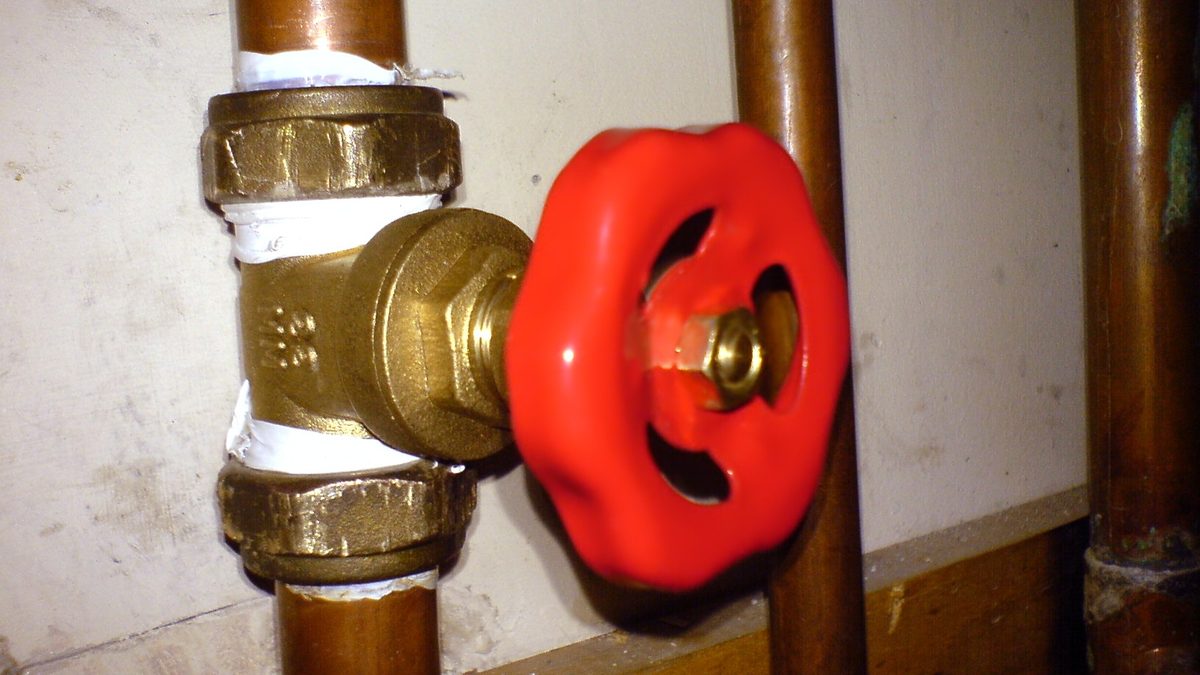
Look in the basement or crawlspace where the water line enters the house, near the water heater, or in an exterior meter box if you live in a warmer climate. Turn a ball valve a quarter turn until the handle sits crosswise to the pipe, or turn a gate valve clockwise until it stops.
- Basement or crawlspace, where the main water line enters the house
- Right next to the water heater
- A utility closet or under the kitchen sink, in some newer homes
- An exterior meter box near the street or front of the house, common in warmer climates
If turning the valve does not stop the water, see our guide on water still dripping after main shut off to understand what it means. If you cannot find the valve within a few minutes, do not keep searching; the next section covers what to do instead. For a full walkthrough, see how to find your main water shutoff valve.

Should You Turn Off the Electricity Too, and Is That Ever Unsafe to Do Yourself?
If you can reach your breaker panel without stepping into any standing water, switch off the breakers serving the flooded area. If reaching the panel means walking through water, do not. Electrical-safety experts advise calling your electric utility to cut power at the meter instead.
For wet outlets, cords, and appliances once the power is off, see whether water damaged electrical equipment is safe to use.
| Situation | What to do |
|---|---|
| You can reach the breaker panel without stepping in water | Shut off the breakers for the flooded area yourself |
| Reaching the panel means walking through standing water | Do not enter the water. Call your electric utility to cut power at the meter |
What if You Cannot Find the Main Valve Fast Enough, or It Is Stuck?
Call your water utility and ask them to shut off service at the curb or meter box while you keep looking. A pipe repair clamp or a rubber patch held with hose clamps can slow the leak as a temporary stopgap, but it is not a fix.
If the leak is actually in your water main or service line rather than an indoor pipe, see our guide on what to do when a water main is leaking for the next steps.
- Do not force a stuck valve with excessive strength; a cracked valve body makes things worse.
- Do not use an open flame, blowtorch, or space heater to thaw a pipe you suspect is frozen (more on this below).
- Do not solder, glue, or permanently seal a pipe yourself while it is wet or under pressure.
- Do not spend more than a few minutes searching before calling your water utility for help.
Is It Safe to Walk Into the Flooded Room, and What Should You Avoid?
Stay out of standing water near outlets, appliances, or extension cords. Watch for a sagging ceiling or a bulging wall, both signs of possible structural failure.
If the water is coming from a boiler or its heating loop rather than a household pipe, the first steps differ. If it is a break on the main line instead, see what to do when a main water pipe bursts for its first-hour steps.
How you treat the standing water also depends on where it came from.
| Category | What it means | How to treat it |
|---|---|---|
| Category 1 | Clean water from a supply line, minimal contamination risk | Safe to clean up yourself with normal precautions |
| Category 2 (gray water) | Significant contamination, can cause illness on contact | Wear gloves and boots; consider a professional for large volumes |
| Category 3 (black water) | Grossly contaminated, sewage or floodwater | Do not handle it yourself; call a professional restoration company |
The IICRC S500 standard, an industry benchmark for restoration professionals, defines these three categories. When in doubt which one you have, treat the water as the more serious category.
How Do You Remove the Standing Water and Start Drying Everything Out?
Use a wet or dry shop vacuum for anything beyond a small puddle; towels alone will not keep up. Get air moving with fans and a dehumidifier right away, because the EPA says wet materials need to dry within 24 to 48 hours or mold is likely to start.
- Wet or dry shop vacuum for standing water
- Box fans or air movers aimed across wet floors and walls
- A dehumidifier running continuously until humidity reads 30 to 50 percent, the range the EPA recommends
- A moisture meter, if you have one, to confirm drywall and subfloor are actually dry, not just surface dry
Photograph everything for your insurance company before you start major cleanup, and follow the CDC's safety precautions for mold clean-up, such as wearing gloves and eye protection.
The EPA notes that porous materials like carpet and ceiling tiles may need to be thrown away once they stay wet or turn moldy, so anything that cannot be fully dried within 24 to 48 hours should generally be discarded or moved outside.
If the burst pipe is under your house in a crawlspace, see how to fix a broken pipe under your house for step-by-step repair and drying guidance, or how to know if a pipe burst under your house to confirm the signs first.
What Should You Photograph or Document, and When?
Take time-stamped photos and video of the standing water, the water line on walls, and every damaged item before you move or remove anything. Once the main valve is off, water is off everywhere in the house, not just the burst pipe's line.
- Wide shots of every affected room, showing how far the water spread
- Close-ups of the water line height on walls and furniture
- Any visibly damaged belongings, flooring, or drywall
- The pipe itself, if you can safely see it
- Receipts for any temporary repairs or emergency services you pay for
Keep these photos with your claim. For the full breakdown of what is and is not covered, deductibles, and how claims get denied, see our complete guide to whether insurance covers a burst pipe, which also covers what restoration typically costs if you end up paying for some of the cleanup yourself.
Will Homeowners Insurance Cover a Burst Pipe, and What Could Get a Claim Denied?
A sudden and accidental pipe burst is typically covered by homeowners insurance, according to the National Association of Insurance Commissioners (NAIC). Coverage can be denied for neglect, such as not heating a vacant home or leaving the water on with no one checking it.
| Situation | Usually covered? |
|---|---|
| Sudden pipe burst from age, corrosion, or a hard freeze while the home was heated and occupied | Usually yes, under homeowners insurance |
| Damage from a pipe that froze because the home was left unheated or vacant with no precautions | Often denied, treated as neglect |
| Water that entered from outside, such as a storm, river, or runoff | Not homeowners insurance; this is what flood insurance (NFIP) covers instead |
Water damage and freezing made up 22.6% of homeowners insurance losses in 2023, with an average claim payout of $15,400, according to the Insurance Information Institute.
This is general information, not legal or insurance advice. Check your own policy or ask your agent about your specific coverage.
What Is Different if the Pipe Burst Because It Froze?
Never apply direct heat or an open flame to thaw a suspected frozen pipe, warns the Maine Emergency Management Agency. A frozen pipe often does not show its full leak until the ice inside melts and pressure releases, so shut off the water and, if safe, the power, even before you see major flooding.
Insurance industry data, drawing on widely cited University of Illinois testing, puts meaningful freeze risk at around 20 degrees Fahrenheit or lower. Insulated pipes typically freeze in about 6 hours below that mark, and about 12 hours between 20 and 32 degrees Fahrenheit.
Once the immediate emergency is handled, preventing a repeat matters. See how to keep your pipes from freezing this winter for a full prevention checklist. For detailed freeze-specific emergency steps and repair guidance, see what to do when a frozen pipe bursts.
What if a Pipe Bursts in an Apartment or Rental Unit?
Shut off your unit's local valve, usually under a sink or behind an appliance, if you cannot reach a building main. Notify your landlord and any neighbors who share your walls or floor right away, and photograph everything before cleanup starts.
Landlords are generally responsible for the pipe and the structure; tenants are generally responsible for their own belongings, unless landlord neglect caused the break. Habitability rules vary by state, so check your local tenant laws or lease for specifics.
When to call a professional
Call a professional right away if any of these apply:
- The water is Category 2 (gray) or Category 3 (black or sewage): do not attempt DIY cleanup, call a professional water damage restoration company.
- The pipe is inside a wall, under a slab, or otherwise not visible or reachable: call a licensed plumber rather than opening walls yourself.
- You cannot reach the breaker panel without stepping into standing water: call your electric utility, do not enter the water.
- Standing water has been sitting more than 24 to 48 hours, or covers a large area: call a professional water damage restoration company, per the EPA's mold-timeline guidance.
- You smell gas, see sparking outlets or exposed wiring, or notice a sagging ceiling or bulging wall: evacuate and call 911 or the fire department immediately. This is a life-safety situation, not a same-day plumber call.
- The main valve is stuck, broken, or you cannot find it within a few minutes: call your water utility to shut off service at the curb or meter.
Frequently asked questions
What if the pipe is inside a wall, under a slab, or otherwise not visible?
Shut off the main valve as usual, then do not cut into walls or flooring yourself to find the leak, especially if you suspect a leaking pipe under a slab; call a licensed plumber to locate and access it safely. A sudden hidden leak is typically still treated as the same sudden and accidental coverage category as a visible burst, according to the NAIC, though your specific policy language always controls.
How much does it typically cost to fix and clean up a burst pipe?
Based on contractor cost estimates, not government data, the plumbing repair itself commonly runs about $400 to $2,000: wall-access repairs often $150 to $500, and main-line repairs up to $2,000. Separate mold remediation, if needed, commonly runs $1,500 to $6,000, or about $10 to $25 per square foot. See our full cost guide for a room-by-room breakdown and what drives the price.
Can I still use other faucets, the toilet, or the dishwasher once I shut off the main valve?
No. Shutting off the main valve cuts water to the entire home, not just the burst line, so nothing that uses water works until it is back on. If you only closed a branch or local shutoff valve instead of the main, other fixtures may still work normally.
What should I throw away versus try to save?
Per EPA guidance, anything that got wet and cannot be fully dried within 24 to 48 hours should generally be thrown away or moved outside, including carpet padding and particleboard furniture. Solid, non-porous items like metal, solid wood, or hard plastic can often be dried and kept. When an item has real value, photograph it first, then ask a restoration professional before you discard anything.
Is a burst pipe considered flood damage, and does flood insurance cover it?
No. Flood insurance through the NFIP covers water entering your home from outside, such as a storm, river, or heavy runoff, on normally dry land. A burst pipe is an internal plumbing failure, so it falls under your homeowners policy instead, not flood insurance. This distinction trips up a lot of homeowners who assume flood coverage applies any time water enters their home.
Should I try to repair or clamp the pipe myself while waiting for a plumber?
A repair clamp, or a rubber patch held on with hose clamps, can slow a leak as a temporary stopgap once the water is already shut off. It is not a permanent fix. Do not treat a clamp as a reason to skip calling a licensed plumber, since a temporary patch can fail under pressure once the water comes back on.
Sources
- US EPA, A Brief Guide to Mold, Moisture and Your Home
- CDC, Mold Clean Up Guidelines and Recommendations
- National Association of Insurance Commissioners (NAIC), Will My Homeowners Insurance Policy Cover Water Damage / Burst Pipe
- Insurance Information Institute (Triple-I), Facts + Statistics: Homeowners and Renters Insurance
- FEMA, National Flood Insurance Program (NFIP), Flood Insurance
- Maine Emergency Management Agency, Preventing and Thawing Frozen Pipes
- IICRC S500 water categories (industry standard, secondary-source summary)
- Contractor cost aggregators for typical burst-pipe repair cost ranges (Angi, HomeAdvisor, Fixr, HomeGuide)