What Causes a Pinhole Leak in Copper Pipe, and What Can You Do?
Quick answer
A pinhole leak in copper pipe is a tiny hole worn through the wall by pitting corrosion. Researchers link it to water chemistry and fast flow, but no single cause is proven. To stop it, shut off and drain the line, use epoxy putty or a clamp as a temporary fix, then have a plumber replace the section.
Key takeaways
- The EPA recommends drinking water stay within a pH range of 6.5 to 8.5 to remain noncorrosive, and Virginia Cooperative Extension calls pH the primary factor in how corrosive your water is.
- In a Virginia Tech lab study, higher water velocity increased pitting in every pipe size tested, and a pinhole formed in test tubing after about two months at 11.2 feet per second.
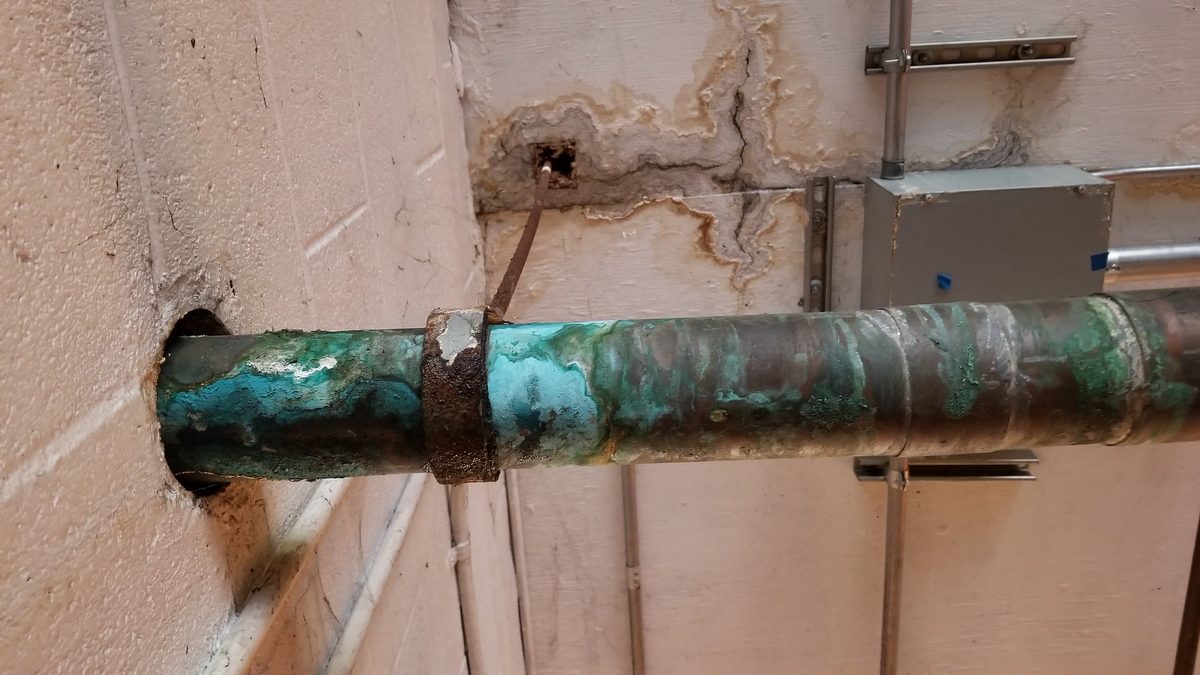
- Blue-green staining on copper is a sign of corrosion, according to Butler County, Ohio's water department, but staining alone does not confirm a pinhole leak.
- For a slow leak, shut the water off and drain the line before applying epoxy putty, per Oatey's repair guide.
- Epoxy putty is only a temporary repair; Oatey says it reaches its strongest hold after 24 hours of cure time.
On this page
- What Causes a Pinhole Leak in Copper Pipe?
- Can Your Water Chemistry Cause Pinhole Leaks?
- Is It a Pinhole, a Joint Leak, or Something Else?
- What Should You Do First When a Copper Pipe Leaks?
- Can You Stop a Pinhole Leak Yourself?
- When Is a Patch Not Enough?
- What Does a Permanent Fix Involve?
- How Can You Lower the Risk of Pinhole Leaks?
- When to call a professional
- Frequently asked questions
What Causes a Pinhole Leak in Copper Pipe?
Pitting corrosion is the process that wears a pinhole through the pipe wall. Researchers link it to water chemistry, fast water flow, and installation or grounding problems, but no single cause is proven.
A 2006 Virginia Tech thesis found no single accepted mechanism behind pinhole leaks, so no one prevention method was proven effective at that time.
Butler County, Ohio's water department lists several possible starting points for pitting: substandard pipe manufacturing, improper installation, improper electrical grounding, and excess plumbing flux. The department also says experts still have not confirmed why pitting that causes pinholes happens.
Water Chemistry That Favors Pitting
You cannot see inside the pipe, so a water test is the real way to check this cause. A Virginia Tech study on water chemistry and flow speed found that non-uniform pitting severe enough to perforate copper tube worsened with high chlorine combined with high pH, and with low alkalinity.
Get your water utility's water quality report, or send a sample to a certified lab. Changing water treatment is a job for your utility or a water-treatment professional, not a homeowner DIY step.
Fast Water Flow
Flow speed is not something you can check by eye. Ask a plumber to test the static pressure and confirm whether a pressure regulator is installed and working.
In the same study, higher water velocity significantly increased pitting in every pipe diameter tested. At the highest velocity tested, 11.2 feet per second, a pinhole formed in lab tubing after only about two months. That is a lab result under high flow, not a prediction for your home.
A plumber can adjust or replace a faulty regulator, but the damaged pipe section still needs a full pipe repair.
Excess Soldering Flux or Poor Installation
A leak that starts near a joint, or shows up soon after new plumbing work, points to the installation. Ask the installer or a plumber to inspect the work.
Butler County's water department names substandard pipe manufacturing, improper installation, and excess plumbing flux among the possible starting points for pitting.
A plumber replaces the affected section. Ask any installer to avoid leaving excess flux on finished joints.
Electrical Grounding Problems
This is not something you can see yourself. Raise it if your home had recent electrical work or other grounding concerns.
Butler County's water department lists improper electrical grounding as one possible starting point for pitting, but says experts have not confirmed how it works. Treat it as one possible factor, not a proven cause.
An electrician can check the grounding. The pipe itself still needs its own repair.
Pipe Quality
A plumber can inspect the pipe and see whether your leak fits a pattern with other pinholes nearby. No homeowner test confirms pipe quality on its own.
Substandard pipe manufacturing is one of the possible starting points for pitting named by Butler County's water department.
Replace the damaged section. If more pinholes show up elsewhere, see the repair-or-replace guidance below.
Can Your Water Chemistry Cause Pinhole Leaks?
It can. The pH of your water is the main factor in how corrosive it is, and the EPA recommends a pH range of 6.5 to 8.5 for noncorrosive drinking water.
Virginia Cooperative Extension calls pH the primary factor that determines how corrosive your water is, citing that EPA range. Corrosive water is not dangerous by itself, but it can dissolve metals such as copper and lead from your pipes, which may pose health risks.
One documented case shows how this plays out locally. A consultant hired by the city of Folsom, California linked a wave of pinhole leaks there to very pure water combined with a pH above 9.0 and the use of chlorine. That is one city's finding, not a general rule for every home.
In lab testing, switching to a chloramine disinfectant instead of free chlorine, or adding silica, sharply cut corrosion activity. That kind of change is made by your water utility, not something you can do at home.
| Water factor | What the research says | What to ask for |
|---|---|---|
| pH | Primary factor in corrosiveness. EPA range for noncorrosive drinking water is 6.5 to 8.5. | pH result from the utility report or a certified lab |
| Chlorine | High chlorine combined with high pH worsened pitting in lab testing. The Folsom case linked a pH above 9.0 with chlorine. | Disinfectant type and level from the utility |
| Alkalinity | Low alkalinity increased pitting severity in lab testing. | Alkalinity result from the same report |
Is It a Pinhole, a Joint Leak, or Something Else?
A pinhole is a small hole in the pipe body, usually a drip or spray from one spot. A leak at a solder joint, a fitting, or a plastic line is a different problem with a different fix.
Blue-green staining on copper pipe is a sign of corrosion, according to Butler County, Ohio's water department, but staining alone does not mean you have an active pinhole leak.
| What you see | Likely meaning | Next step |
|---|---|---|
| Blue-green staining on copper | Corrosion. Not proof of a leak. | Check for an active drip and treat it as a warning. |
| Drip or spray from one spot on a copper run | Possible pinhole | Follow the first-hour steps, then plan a permanent repair. |
| Leak at a solder joint or compression fitting | Joint or fitting failure, not a pinhole | Repair the joint, a different fix than a pinhole. |
| Plastic PEX line leaking at a fitting | Fitting failure in plastic pipe, not copper | See the PEX article linked below. |
| Wet drywall, bubbling paint, or a rising water bill, with no visible drip | Possible hidden leak inside a wall or ceiling | Shut off the water and have a plumber locate the leak. |
If your line is plastic PEX instead of copper, see why PEX leaks at fittings for the right fix.
Whether a leak like this is covered depends on your policy, so read how homeowners insurance treats a burst pipe before you commit to repairs.
What Should You Do First When a Copper Pipe Leaks?
Shut off the water to that line, drain it, and protect the area. A slow leak must be shut off and drained before you start any temporary repair.
- Shut off the water, using the nearest shutoff valve for that line, or the main water shutoff valve if you cannot find it.
- Open a faucet on the line to drain it.
- If water is near outlets, switches, or appliances, turn off power at the breaker before touching anything wet.
- Put a bucket or towel under the leak and move valuables out of the way.
- Photograph the spot and note where water shows up, for your plumber and your insurer.
Call a plumber now if water is spraying hard, spreading into a wall or ceiling, or you cannot shut it off.
If the pipe has fully burst rather than leaking from a pinhole, follow the first-hour steps if a pipe bursts instead.
Can You Stop a Pinhole Leak Yourself?
Yes, for a short time. Epoxy putty and repair clamps can hold a small leak as a temporary repair, but the pipe section still needs a plumber.
Epoxy Putty
Use epoxy putty when the spot is reachable and the leak is small.
Oatey's guide for its Fix-It Stick epoxy putty describes it as only a temporary repair until a plumber completes the job. The putty reaches its strongest, most reliable hold after 24 hours of cure time.
- Shut off and drain the line first if it is a slow leak.
- Dry or wipe the area if you can reach it.
- Press the putty over the hole, covering it fully.
- Give it the full 24 hours to cure before you rely on it.
- Use it to hold the leak until a plumber replaces the pipe section.
Repair Clamp
Check that the clamp is sized for your pipe diameter before you buy one.
Follow the clamp maker's instructions for size and tightening. Treat it as a stopgap until a plumber replaces the section.
Tape
Tape is only for a very small, slow weep, and even then it is not a lasting fix.
Check a tape repair often and treat it as a short hold. No source in our research supports tape as a lasting repair.
| Option | What it does | Limit |
|---|---|---|
| Epoxy putty | Seals a hole as a temporary repair | Stopgap until a plumber finishes; allow 24 hours to cure |
| Repair clamp | Covers the hole mechanically | Stopgap; follow the maker's instructions |
| Tape | Short hold on a small weep | No source supports a lasting repair |

When Is a Patch Not Enough?
A patch fixes one hole but not the reason it formed. If the leak could be system-wide, have a plumber look at the whole run, not just the spot.
Researchers have not settled on one mechanism behind pinhole leaks, so patching one hole does not address the underlying cause.
| Situation | What it may mean | Next step |
|---|---|---|
| One pinhole, no other leaks, no recent install work | Localized hole; cause still uncertain | Patch as temporary, have a plumber replace the section, test water chemistry |
| Pinholes in more than one area | Possible system-wide problem; no single proven cause | Ask a plumber to inspect the run and the water |
| Leak right after new installation or repair near joints | Installation issue suspected | Call the installer |
| Water test shows a high pH or chlorine concern | Water chemistry may be a driver | Ask a plumber or water specialist; the utility may need to act |
| Leak inside a wall, ceiling, or under a slab | Hidden leak that may involve water damage | Have a plumber locate it and check for moisture damage |
No confirmed source gives a number of leaks that forces a full repipe. A plumber should decide based on the condition of the whole run, not a fixed count.
For help tracing a leak you suspect is hidden inside a wall, see how indoor leaks are traced inside the house.
What Does a Permanent Fix Involve?
A permanent fix usually means a plumber cuts out the damaged section and installs new pipe and fittings, then checks the repair. A putty or clamp is not the end of the job.
- The plumber shuts off and drains the line.
- The plumber opens the wall or ceiling if needed to reach the section.
- The damaged section is cut out and replaced with new pipe and fittings.
- The repair is checked for leaks before the wall is closed.
Cost depends on how much pipe needs replacing and how hard it is to reach. We have not found a reliable sourced cost figure for this specific repair, so we are not stating one here.
For the general repair process, including wall access and reassembly, see how to fix a burst pipe, step by step. If the pipe runs inside a wall, see fixing a broken pipe in the wall.
How Can You Lower the Risk of Pinhole Leaks?
No single prevention is proven, so focus on what the research links to pinholes: water chemistry, flow speed, and clean installation.
- Get your water tested for pH, alkalinity, and chlorine from the utility report or a certified lab.
- Ask installers to avoid excess flux on joints.
- Ask an electrician to check grounding after electrical work.
- Ask a plumber to check flow and pressure, including the regulator.
A plumber can also help you decide whether a single section repair is enough, or whether a larger repipe makes sense for an older system with more than one pinhole.
When to call a professional
Call a plumber today if any of these apply:
- Water is spraying or running from the pipe.
- You cannot shut the line off.
- Water is spreading into walls, ceilings, or floors.
- Water is near outlets, switches, or appliances. Turn off power at the breaker first.
Call within a few days for:
- A slow drip or a stain that keeps growing.
- Pinholes showing up in more than one area.
- A leak that starts right after new plumbing work near a joint or repair.
Call an electrician if grounding is a concern, and call your water utility for its water quality report.
Frequently asked questions
Is a pinhole leak in copper pipe an emergency?
It can be, depending on how fast water escapes and where it goes. A slow drip inside a wall can cause hidden damage before anyone sees it, so treat any active leak as urgent. If water is spraying, spreading, or near electrical parts, shut the water off and call a plumber now. For a slow drip, shut off the line, put a bucket under it, and book a plumber promptly.
Is water from a copper pipe with pinholes safe to drink?
Corrosive water is not dangerous in itself, but it can dissolve metals such as copper and lead, which may pose health risks. If you have a leak or concerns about your water, ask the water utility or a certified lab to test it for pH and metals before you rely on it for drinking.
How long does it take for a pinhole to form?
In a Virginia Tech lab study, a pinhole formed in lab tubing after about two months at 11.2 feet per second. That is a lab result under high flow, not a timeline for your home. Real timing depends on water chemistry, flow, and pipe quality, and no source gives a home timeline.
Does epoxy putty permanently seal a copper pipe?
No. Oatey describes its epoxy putty as a temporary repair until a plumber completes the repair. The putty gets its strongest hold after 24 hours, so give it the full cure time. Use it to hold the leak until the damaged section is replaced.
Can insurance cover a pinhole leak?
It depends on your policy wording and the cause of the leak. This is general information only, not advice on a specific claim. Check your own policy, ask your insurer before major repairs, and keep photos, receipts, and your plumber's report so the claim has evidence.
Why does one house get pinholes when a neighbor's does not?
Researchers have not agreed on one mechanism, so two homes on the same street can differ. Water chemistry, flow, installation, grounding, and pipe quality all vary from house to house. No single cause explains every case, so a plumber should look at your own pipe and water rather than assume the neighbor's cause applies to you.
Sources
- Custalow, B.D. (2009), Influences of Water Chemistry and Flow Conditions on Non-Uniform Corrosion in Copper Tube, Virginia Tech MS thesis
- Farooqi, O.E. (2006), An Assessment and Modeling of Copper Plumbing Pipe Failures due to Pinhole Leaks, Virginia Tech MS thesis
- Benham, B., Ling, E.J., and Haering, K. (2024), Corrosive Household Water, Virginia Cooperative Extension publication 442-665, Virginia Tech
- Butler County, Ohio, Water and Sewer Department, Pinhole Leaks web page
- CBS Sacramento (Oct 21, 2020), Folsom Finds Possible Source Of Pinhole Leaks In Copper Pipes Plaguing Hundreds Of Homes
- Oatey, Temporarily Repair Leaking Pipes with Oatey Fix-It Stick (project guide)