What Should I Do About a Burst Supply Pipe?
Quick answer
A burst supply pipe is the small line feeding one fixture, such as a toilet, sink, washer, dishwasher or ice maker. Close that fixture's angle stop valve first, not the main. If it will not turn or water keeps flowing, close the main or call your utility. Then keep it closed and start drying. <a href="#first-steps">Jump to the steps</a>.
Key takeaways
- About half of washing machine water damage incidents come from a burst supply line, averaging more than $6,000 per incident, according to the Connecticut Insurance Department.
- 73% of ice maker losses are caused by a failed supply hose, per the same Connecticut Insurance Department pamphlet.
- Toilet water damage runs $2,000 to $10,000 per incident, and 78% of toilet incidents trace back to a faulty supply line, flange, fill valve or overflow.
- A washing machine hose can leak 10 to 12 gallons a minute, so an unattended burst can flood a room fast.
- Test each fixture's shutoff valve and inspect supply hoses every 6 months; replace washing machine hoses about every 5 years.
On this page
- What are the first steps when a burst supply pipe is leaking?
- Where is the shutoff for each appliance and fixture line?
- What if the burst supply pipe's valve will not turn or still leaks?
- Which supply lines fail most often, and why do they burst?
- How much water can a failed washer or ice maker line release?
- How do I test the shutoff valve and check the hoses before a burst?
- Can I replace the supply line myself, or do I need a plumber?
- What should I document for an insurance claim after a supply line bursts?
- How soon do I need to dry out floors, walls and cabinets?
- Who do I call first if I rent or live in a condo?
- When to call a professional
- Frequently asked questions
What are the first steps when a burst supply pipe is leaking?
Close the angle stop valve on the failed fixture first, not the main shutoff. It is the fastest way to stop a burst supply pipe, because it only shuts off that one line.
If you cannot find or turn that valve, move to the home's main shutoff right away. For a break inside a wall or ceiling instead of at a fixture, see our guide on what to do when any pipe in your home bursts.
- Close the angle stop valve on the fixture that failed (toilet, sink, washer, dishwasher or ice maker).
- If the valve resists, is stuck, or will not fully close, go to step 3.
- Close the home's main water shutoff valve.
- Open a nearby faucet to drain the pressure left in the line.
- Stay away from any outlet, cord or appliance sitting in standing water until you know the power is safe.
- Start drying the area and photograph the failed line and the damage before you clean up.
Where is the shutoff for each appliance and fixture line?
Sinks usually have two valves underneath, one hot and one cold. A toilet has a single cold valve behind the bowl. A washing machine's valve sits behind the machine, and dishwasher or ice maker valves are usually near the fixture, though placement is not the same in every home.
| Fixture | Where the valve usually is | What to close first |
|---|---|---|
| Toilet | One cold valve behind the bowl, near the floor | That valve |
| Sink (kitchen or bathroom) | Two valves under the sink, one hot and one cold | Both valves; see our guide on what to do when a pipe bursts under the sink |
| Washing machine | Behind the machine, usually two valves on the wall | Both valves, then unplug the machine |
| Dishwasher and ice maker | Often under a nearby sink or behind the appliance; this varies by installation and is not confirmed for every setup | That valve if you can find it; otherwise close the main |
Toilet supply line
The toilet's cold valve sits low behind the bowl. Turn it clockwise to close it. If the tank or bowl is overflowing, close this valve right away. See our guide on a burst pipe in the bathroom for more on toilet and bathroom line failures.
Sink supply line
Kitchen and bathroom sinks have two valves under the cabinet. Close both the hot and cold valve, then open the faucet to release pressure.
Washer, dishwasher and ice maker lines
A washing machine's valve is usually on the wall behind the machine. Leave 3 to 4 inches of space behind the washer so the hose does not kink near the valve connection. Dishwasher and ice maker valves are often under a nearby sink or behind the appliance, but check yours directly since placement is not standard across installations.
What if the burst supply pipe's valve will not turn or still leaks?
Do not force a stiff valve. A seized or leaking valve can break if you force it, and if the fixture valve will not fully close, close the main instead.
- Valve closes and the leak stops: start cleanup and documentation.
- Valve will not turn, weeps at the stem, or water still flows: close the main water shutoff, or call your water utility if you cannot find or close it.
A valve stem can seize from corrosion or mineral buildup, and it can weep or drip around the stem even when the valve looks closed.
If the valve will not turn or will not shut off the water fully, replacing it is worth considering. Quarter-turn valves can also seize if left untouched for a long time, and their stem seals can eventually leak.
If you cannot close the main yourself, your water utility can help shut off the main valve, according to the North Texas Municipal Water District. For help finding your home's main shutoff, see our guide on where the main water shutoff valve is.
If the break turns out to be in the main line itself rather than a fixture, see our guide on what to do when the main water line is leaking.
Which supply lines fail most often, and why do they burst?
Washing machine, ice maker and toilet supply lines cause most of these losses. Look for cracks, kinks or blisters near the hose connection, and avoid over-tightening fittings.
| Fixture | Share caused by a faulty supply line or valve |
|---|---|
| Washing machine | About half of incidents |
| Ice maker | 73% of losses, from the supply hose |
| Sink | 44% of incidents |
| Toilet | 78% of incidents, including flanges, fill valves and overflow |
These figures come from an undated pamphlet published by the Connecticut Insurance Department, citing research from the Insurance Institute for Business & Home Safety. They describe that study's incidents, not a national rate, but they show the same pattern: the supply line and its connections, not the fixture itself, are usually the weak point.
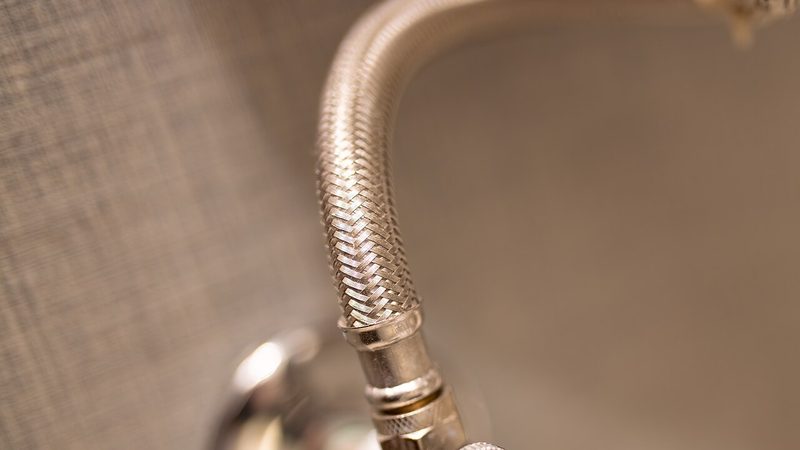
Check hoses for cracks, kinks or blisters, which most often appear near the connection, the pamphlet advises. Reinforced braided stainless steel hoses are worth considering over older rubber hoses, and avoid over-tightening fittings when you connect one.
How much water can a failed washer or ice maker line release?
A washing machine hose can leak 10 to 12 gallons a minute, so a line that fails while you are out can flood a room fast, according to the North Texas Municipal Water District. Do not run the washer when nobody is home.
The Connecticut Insurance Department advises turning off supply valves when an appliance is not in use, and not operating the washing machine while the home is unoccupied. A short errand is enough time for an unattended line to do real damage.
How do I test the shutoff valve and check the hoses before a burst?
Operate each shutoff valve now to confirm it closes, and replace it if it does not. Check supply hoses every 6 months, and replace washing machine hoses about every 5 years. For the full replacement steps, see our guide on replacing appliance hoses before they burst.
| How often | What to do |
|---|---|
| Every 6 months | Turn each fixture's shutoff valve closed and open again to confirm it still works. Inspect supply hoses for cracks, kinks or blisters. |
| Every 5 years | Replace washing machine hoses, even if they look fine, per manufacturer guidance. |
| Before a long trip | Close the fixture valves that feed appliances you will not use while away. |
This advice comes from the Connecticut Insurance Department's water damage pamphlet, which also recommends reinforced braided stainless steel hoses over older rubber ones. A plumber can quote the cost of replacing a valve or hose if you are not comfortable doing it yourself.
Can I replace the supply line myself, or do I need a plumber?
If the line is cracked, bulging, leaking at a fitting, or the valve will not shut off, call a licensed plumber. Over-tightening a connection can damage it, so do not force a fitting past where it should go.
If you already have the tools and the valve works, the Connecticut Insurance Department's own steps are to hand tighten the connection first, then add about two-thirds of a turn with pliers. If you are not confident doing this yourself, have a plumber confirm the fit instead.
A loose fitting you can reach and retighten safely is a reasonable DIY job. A line hidden in a wall, a seized valve, or any rigid pipe burst is a job for a plumber.
What should I document for an insurance claim after a supply line bursts?
Photograph the failed line, the valve and the damage before you clean up. Keep the failed hose or fitting, and write down the time you closed the valve. Coverage depends on your policy, so check it or ask your insurer. This is general information, not advice on your specific policy.
- Photograph the burst line, the valve, and all affected areas before moving anything.
- Keep the failed hose, fitting or valve for the adjuster or plumber to examine.
- Write down the date and time you closed the valve and when the leak started, if you know it.
- List damaged flooring, cabinets and belongings with photos of each.
- Contact your insurer to ask what your specific policy covers before starting repairs.
Washer hose failures generate real claims, and the Delaware Department of Insurance lists burst washing machine hoses among the costliest of them. State Farm paid nearly $30 million on homeowners claims tied to washing machine hose failures in 2020, with an average claim around $10,200 that varies by state.
Separately, the Connecticut Insurance Department, citing the Insurance Institute for Business & Home Safety, puts the average washer supply-line incident at more than $6,000. For more on what a policy typically covers, see our guide on whether insurance covers a burst pipe.
How soon do I need to dry out floors, walls and cabinets?
Start drying right away once the valve is closed. Waiting raises both the repair cost and the mold risk, though no single confirmed hour count applies to every situation.
Open the area to air, run a fan, and add a dehumidifier if you have one. Remove standing water first, then check flooring, baseboards and cabinets for dampness that is not visible on the surface.
For more on how a burst pipe's water damage develops over time, see our guide on how a burst pipe's water damage develops.
Who do I call first if I rent or live in a condo?
Close the fixture valve yourself first. It is the fastest way to stop the water, whether you own the home or not.
After the water is off, tell your landlord or your condo association. The line may be shared with other units, or repairs may fall under their responsibility rather than yours. Check your lease or association rules for who handles plumbing repairs and who pays.
Keep your own photos and notes even if someone else is responsible for the fix, since you may need them for your own renters or condo insurance claim.
When to call a professional
Call a licensed plumber right away if:
- Water keeps flowing after you have closed both the fixture valve and the main.
- The fixture valve will not turn, leaks at the stem, or will not fully stop the water.
- The supply line is cracked, bulging, or dripping at a fitting.
- The break is inside a wall or cabinet you cannot reach.
Call your water utility if:
- You cannot locate or close the home's main water shutoff valve yourself.
Safe to schedule within a day or two if:
- The fixture valve closed fully and the leak has stopped.
- You only need a routine hose or valve replacement and the area is already dry.
Frequently asked questions
Can I leave the water on until a plumber arrives?
No. Close the fixture valve as soon as you find the leak, and keep it closed until a plumber has repaired the line. Leaving water on lets the leak continue, and it can flood more floor, cabinets and walls in the time you are waiting.
Does a braided stainless steel hose prevent all bursts?
No. Reinforced braided stainless steel hoses are the option the Connecticut Insurance Department recommends, but no hose is fail-proof. You still need to inspect hoses every 6 months, watch for cracks, kinks and blisters, and replace washing machine hoses on the manufacturer's schedule of about 5 years.
How do I know if my shutoff valve works?
Close it gently and see whether the water stops. A valve that will not close fully, or that leaks around the stem, should be replaced. Test it now rather than during an emergency, and do not force a stiff valve.
Does homeowners insurance pay for a burst washer hose?
It depends on your policy. Insurer data shows washer hose failures produce many claims, but coverage terms differ by policy and state. Photograph the damage and the failed line before clean-up, then ask your insurer exactly what your specific policy covers before repairs begin.
Should I turn off the water when I leave home for a long trip?
The Connecticut Insurance Department advises turning supply valves off when an appliance is not in use, and not running the washing machine while the home is unoccupied. For a long trip, closing the fixture valves that feed appliances is the simplest step.
Sources
- Connecticut Insurance Department, water damage pamphlet (citing IBHS; undated)
- Insurance Institute for Business & Home Safety (IBHS), Interior Water Damage: State of the Risk
- North Texas Municipal Water District, Broken pipes and water leaks (2021)
- State Farm Newsroom, A $30M load of laundry (2021)
- Delaware Department of Insurance, Homeowner Damage Control consumer alert (undated)