What to Do Immediately When a Pipe Bursts Under the Sink
Quick answer
When a pipe bursts under your kitchen or bathroom sink, shut off the small angle stop valve directly beneath it, not the main valve, within 5 minutes. Open the nearest faucet to release pressure, then soak up standing water. Open cabinet doors and point a fan inside. Call a plumber if the valve will not turn. <a href="#first-5-minutes">Jump to the steps</a>.
Key takeaways
- Shut off the angle stop valve under the sink within 5 minutes; a burst half-inch supply line can release roughly 240 to 480 gallons per hour at full pressure.
- Dry the cabinet and floor within 24 to 48 hours; clean water left standing that long can turn into contaminated water under IICRC S500 category rules.
- Flexible supply hoses usually fail after 5 to 10 years; rust spots or frayed braiding mean replace it now, not later.
- Homeowners insurance generally covers the water damage a sudden burst causes, but not the cost of the pipe or hose itself.
On this page
- What are the first steps when a pipe bursts under the sink?
- What should you not do during a burst pipe emergency?
- What actually failed: the supply line, the P-trap, or the shutoff valve?
- Can you fix a burst pipe under the sink yourself?
- How long do you have to dry the water before mold becomes a problem?
- Is a burst pipe under the sink covered by homeowners insurance?
- When to call a professional
- Frequently asked questions
What are the first steps when a pipe bursts under the sink?
Turn off the angle stop valve under the sink first, not the main shutoff. It is faster to reach and only stops that one fixture, whether the burst is under a kitchen sink or a bathroom sink.
Find the angle stop valve
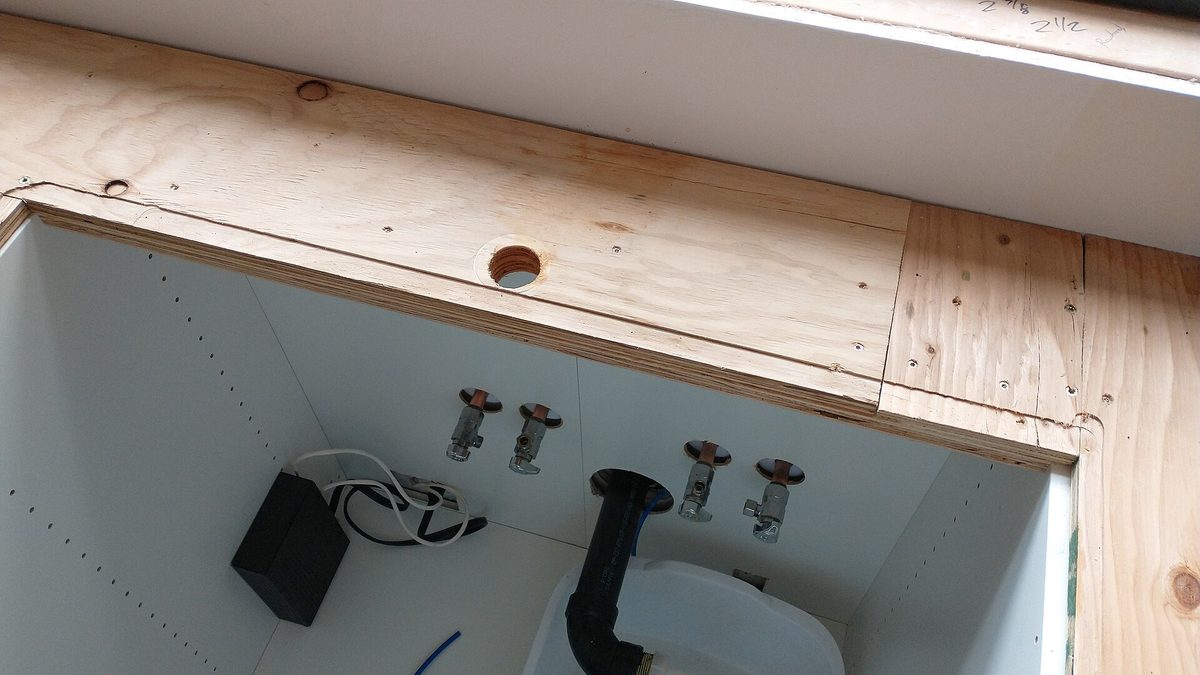
Look where the supply lines enter the cabinet, usually against the back wall. You will see two small valves, one for hot water and one for cold, each with an oval handle or a small lever.
Turn it off, then open the faucet
Turn each handle clockwise until it stops. Then open the sink faucet to release the pressure still trapped in the lines. This also confirms the water actually stopped.
If the valve will not turn
Do not force it. A stuck or corroded valve can snap off and make the leak worse. Go to your home's main water shutoff instead, usually in the basement, a utility closet, or near the water meter.
| Time | Action |
|---|---|
| 0 to 1 minute | Locate the angle stop valve under the sink and turn it off |
| 1 to 2 minutes | Open the faucet to release pressure; confirm the leak has stopped |
| 2 to 5 minutes | If the valve is stuck or broken, shut off the home's main water valve |
| 5 to 15 minutes | Soak up standing water with towels or a wet/dry vacuum |
| 15 to 60 minutes | Open cabinet doors, point a fan inside, and check the subfloor for softness |
A burst half-inch supply line can release roughly 240 to 480 gallons of water an hour at full house pressure, so every minute before shutoff matters. You are fortunate your pipe burst under the sink where it is accessible; see our wall burst contrast article to understand why wall and slab bursts are far more expensive to fix.
What should you not do during a burst pipe emergency?
Do not leave the cabinet closed, use the main valve as your first move, or wait to see if the leak stops on its own.
- Do not touch a garbage disposal, outlet, or any plugged-in cord near standing water. If water has reached an electrical outlet or the disposal under the sink, turn off power to that circuit at the breaker before you touch anything in the cabinet.
- Do not ignore a small drip and hope it stops. A failing hose or valve under pressure can go from a drip to a full burst in seconds.
- Do not leave the cabinet doors closed. Trapped water spreads into the particle-board cabinet floor and the subfloor underneath before you notice it.
- Do not reach for the main shutoff first if the angle stop under the sink is reachable. Going to the basement first can waste several minutes of continued flooding.
- Do not leave standing water overnight. Mold can begin growing within 24 to 48 hours in a warm, enclosed cabinet.
- Do not run the sink again until the burst part is shut off and you know what failed.
If your pipe burst because it froze in a cold cabinet against an exterior wall, the same angle stop shutoff applies, but the pipe itself likely needs replacement, not just a tightened fitting.
What actually failed: the supply line, the P-trap, or the shutoff valve?
Three different parts under a sink can leak or burst, and each points to a different fix. Look at exactly where the water is coming from.
| Component | Where water appears | Likely cause | Repair scope |
|---|---|---|---|
| Flexible supply hose | At the braided hose itself or its connection fitting | Age (hoses typically last 5 to 10 years) or high water pressure | Replace the hose; often doable yourself with the water off |
| P-trap | Dripping below the curved drain pipe | A loose slip nut, the most common under-sink leak | Hand-tighten or wrench-tighten the nut; rarely a true burst |
| Shutoff (angle stop) valve | Leaking from the valve body itself, even after you close it | Corrosion, mineral buildup, or age (valves can last around 20 years) | Requires a plumber to replace the valve |
Rust or a pinhole changes the picture
Corrosion warning signs like rust spots or frayed metal braiding on a supply hose mean its protective layer is already breaking down. Pinhole leaks as a burst precursor are a sign of ongoing internal corrosion, not an isolated problem, and the pipe needs replacement rather than a patch.
A small leak or wet spot you noticed before the full burst is consistent with this kind of slow corrosion finally giving way.

Can you fix a burst pipe under the sink yourself?
A loose P-trap nut is a reasonable DIY fix. A burst supply hose can be temporarily clamped, but a true pipe burst or a failed valve needs a plumber.
- DIY now: tighten a dripping P-trap slip nut by hand, then with a wrench if needed.
- DIY, temporary only: clamp a burst flexible hose with a C-clamp and rubber padding to slow the leak until you can replace the hose, within hours, not days.
- Plumber required: a burst in a rigid supply line, a shutoff valve leaking from its own body, or any pinhole leak from corrosion.
Replacing a worn flexible hose yourself is straightforward once the water is off. See our guide on permanent repair after the emergency for the tools and steps if the break is in rigid pipe or you need detailed instructions for hose replacement.
How long do you have to dry the water before mold becomes a problem?
You have roughly 24 to 48 hours to dry the cabinet and floor before mold growth becomes likely, according to the U.S. Environmental Protection Agency. The clock starts the moment the water stops flowing.
Water from a burst supply line starts as clean water, called Category 1 under the water-damage industry's IICRC S500 standard. Left sitting in a warm, dark cabinet against wood and particle board, it can degrade into contaminated Category 2 water within that same 24 to 48 hour window.
| Time since the leak stopped | What to do | Mold risk |
|---|---|---|
| 0 to 1 hour | Remove standing water with towels or a wet/dry vacuum | Minimal |
| 1 to 6 hours | Open cabinet doors, point a fan at the cabinet floor | Low |
| 6 to 24 hours | Add a dehumidifier if available; check if the subfloor still feels damp | Rising |
| 24 to 48 hours | Water should be gone; damp wood past this point needs professional drying equipment | High |
| Beyond 48 hours | Treat any remaining dampness as a mold risk and a Category 2 cleanup | Likely |
Cabinet water does not just sit on the surface. It runs down the cabinet walls, soaks into the particle-board base, and wicks sideways into the subfloor and baseboards, which is why a cabinet that looks dry on top can still be wet underneath.
Is a burst pipe under the sink covered by homeowners insurance?
Usually yes for the water damage itself, but not for the pipe or hose that failed. This is general information, not advice on your specific policy, so check your own policy wording or call your insurer.
| Item | Covered | Not covered |
|---|---|---|
| Damaged cabinet, flooring, subfloor | Yes, under dwelling coverage | |
| Damaged belongings nearby | Yes, under personal property coverage | |
| The burst supply hose or pipe itself | No, that is a repair cost you pay | |
| Damage from a slow leak you knew about for months | No, treated as neglected maintenance |
The key distinction insurers use is sudden and accidental versus gradual. A supply hose that lets go without warning is normally covered. A pipe that has been dripping for weeks before the full burst can get denied as a maintenance issue.
See the National Association of Insurance Commissioners' explanation of burst pipe coverage for how adjusters draw that line, and our own page on whether insurance covers a burst pipe for more detail. For repair cost and insurance next steps, see our under-sink cost guide.
When to call a professional
Call a plumber the same day if:
- The angle stop valve under the sink will not turn after about 30 seconds of effort, or it leaks from the valve body itself.
- Water is spraying or flowing continuously from a rigid pipe rather than a hose connection.
- Water keeps flowing more than 30 minutes after you shut the angle stop, which points to a failed valve.
- You see a pinhole leak in a copper or steel line; that pipe needs replacement, not a patch.
Call a plumber within 24 hours if:
- You tightened a P-trap slip nut and it is still dripping.
- You clamped a burst flexible hose as a temporary fix and need a permanent replacement.
- The cabinet floor or baseboards stayed wet and are not drying within 12 hours despite fans and open doors.
Safe to schedule in a day or two if:
- A loose P-trap nut was the whole problem and tightening it stopped the drip completely.
- You only need a routine flexible-hose swap and the area is already dry.
Frequently asked questions
How do I know if the shutoff valve under my sink actually worked?
Turn the handle slowly; the water flow should stop within 5 to 10 seconds. If water still flows after a full turn, the valve is broken and you need the main shutoff instead. If it drips from the valve body after you close it, the valve itself needs replacing, not just a tighter turn.
What is the fastest way to get standing water out of the cabinet?
Use old towels, a wet/dry shop vacuum, or a small pump for deep pooling, wringing towels into a bucket rather than carrying dripping ones across the floor. Once the bulk water is gone, point a fan into the cabinet and leave the doors open for 24 to 48 hours to dry the hidden surfaces underneath.
Is it safe to use the sink while a plumber is on the way?
No. Keep the faucet off until the burst part is shut off and identified. Running water through a damaged supply line, hose, or P-trap adds more water to an already wet cabinet and can hide exactly where the failure is, making the plumber's job slower and the damage worse.
Why did my supply hose burst if it is only a few years old?
Age is the usual cause, but high household water pressure speeds it up. High pressure forces the hose's internal rubber tube to expand repeatedly every time you use the faucet, wearing it out years before the typical 5 to 10 year lifespan ends. A pressure-regulating valve where water enters the home can extend hose life.
Does a burst pipe under the sink always mean the whole house loses water pressure?
No. Shutting off the angle stop under the sink only affects that one fixture; the rest of the house keeps running water normally. You only lose water everywhere if you have to use the main shutoff because the angle stop is stuck, broken, or missing.
What does it typically cost to repair a burst pipe under a sink?
Under-sink repairs are often cheaper than wall or slab repairs because there is no demolition involved, just access through the cabinet. Emergency same-day plumber visits generally cost more than a scheduled appointment. Ask your plumber for a written estimate once they see the actual failed part.
Sources
- U.S. Environmental Protection Agency, A Brief Guide to Mold, Moisture and Your Home
- CDC, Mold Clean Up Guidelines and Recommendations
- IICRC S500 Standard and Reference Guide for Professional Water Damage Restoration
- National Association of Insurance Commissioners (NAIC), Will My Homeowners Insurance Policy Cover Water Damage From a Burst Pipe
- Insurance Information Institute (Triple-I), Facts + Statistics: Homeowners and Renters Insurance