Is Water Damaged Electrical Equipment Safe, and What Should You Do?
Quick answer
Water damaged electrical equipment is not safe to use until a licensed electrician has evaluated it. Keep the power off, do not touch wet outlets, panels, cords, or appliances, and do not step into standing water. Do not dry and reuse anything that was submerged in or touched water; drying alone does not make it safe.
Key takeaways
- Any electrical equipment submerged in or in contact with water must be replaced, not reused, according to Schneider Electric's storm response FAQ.
- Turn off power at the breaker only if you can reach it without standing in water; if you cannot, call your utility to disconnect power at the meter, as ComEd advises.
- Keep the power off until a licensed electrician or electrical contractor inspects the system, per Schneider Electric's storm response FAQ.
- Drying does not make wet equipment safe: the National Safety Council, citing the Electrical Safety Foundation International, says water-damaged equipment poses a serious long-term fire risk even after it is thoroughly dried.
- Molded-case circuit breakers are always on the replace list, and Minnesota's Department of Labor and Industry says submerged furnaces, water heaters, and dishwashers must be replaced too.
On this page
- Is water damaged electrical equipment dangerous to touch?
- How do I cut the power if I cannot reach the breaker box dry?
- Can I turn the power back on myself?
- Which water damaged electrical equipment has to be replaced?
- Can water damaged electrical equipment be dried or reconditioned?
- What about appliances like the furnace, water heater, or fridge?
- What if the breaker trips, an outlet is warm, or a GFCI will not reset?
- Does water damage to electrical equipment change with sewage or saltwater?
- Does insurance pay for electrical damage and ruined appliances?
- When to call a professional
- Frequently asked questions
Is water damaged electrical equipment dangerous to touch?
Yes. Treat any electrical equipment that was submerged in or came into contact with water as unsafe until a licensed electrician has checked it. Do not touch wet outlets, panels, cords, or appliances, and do not step into standing water to reach them.
For safety reasons, Schneider Electric's storm response FAQ says electrical equipment that has been submerged or come into contact with water needs to be replaced. The City of St. Petersburg, Florida, agrees that submerged circuits are typically not safe to energize.
- Wet outlets and switches
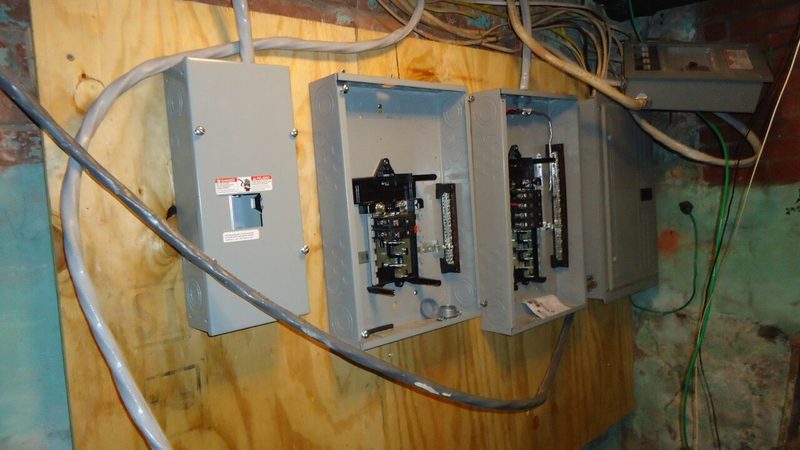
- A wet panel or breaker box
- Wet cords and power strips
- Wet appliances
Contact counts, not only flooding
This replace rule covers equipment that came into contact with water, not only equipment that sat under floodwater. No source gives a water-height number, so this article does not use one.
This danger starts the moment water reaches a plug or panel, often the same moment you are also working out what to do in the first hour after a pipe bursts.
How do I cut the power if I cannot reach the breaker box dry?
Turn off power at the breaker only if you can reach it without standing in water. If you cannot, call your utility and ask it to disconnect power at the meter before anyone goes into the flooded area.
| Situation | What to do | Source |
|---|---|---|
| Breaker reachable without standing in water | Turn off power to the flooded area at the breaker | ComEd |
| Breaker is in water, or reachable only by standing in water | Do not reach into the water. Call your utility to disconnect power at the meter before anyone enters | ComEd |
| Entering a flooded home | Do not enter until the main breaker or fuse box is off. If that means standing in water, use the utility disconnect instead | City of St. Petersburg |
| Downed power line | Stay away and call your utility. No safe distance is sourced here | General safety advice |
Call the utility to disconnect at the meter
Utilities differ. ComEd, an Illinois utility, can shut off some smart meters remotely once you call. Find your own utility's number on your bill or its website; this article does not publish one utility's number as a general number.
Before you touch anything near the panel, it helps to also know how to find your main water shutoff valve, since stopping the water is usually the first move.
Can I turn the power back on myself?
No. Keep the power off until a licensed electrician or electrical contractor inspects the system.
The Texas Department of Insurance likewise advises having a qualified electrician evaluate water damaged electrical equipment before it is used again. Whether a homeowner may legally reconnect power in your state is not confirmed here, so check with your local building department.
| Place | Who is named | What the source says |
|---|---|---|
| Texas (TDI) | Qualified electrician | Evaluate before use |
| Tennessee (State Fire Marshal, 2019) | Certified electrical inspector, then licensed electrician | Inspector visually checks flood-affected locations; owner works with a licensed electrician on what to replace or repair |
| Minnesota (Dept. of Labor and Industry) | Licensed trades | Submerged wiring and equipment must be replaced |
| St. Petersburg, Florida (city) | Power off at main before entering | Submerged circuits are not safe to energize |
| Illinois (ComEd utility) | Utility | Disconnect at the meter when the breaker cannot be reached dry |
These are examples from one state, city, or utility, not national rules; no national rule is confirmed.
Who decides, by state or city
Rules vary from place to place. Ask your local building department or your electrician which inspection applies where you live.
Which water damaged electrical equipment has to be replaced?
Equipment that was submerged in or came into contact with water must be replaced. Molded-case circuit breakers, outlets, switches, dimmers, and GFCIs or AFCIs are all named on the National Safety Council's replace list, citing the Electrical Safety Foundation International.
| Part | Confirmed rule | Who decides | Source |
|---|---|---|---|
| Molded-case circuit breakers | Replace | Electrician | National Safety Council |
| Outlets (receptacles) and outlet boxes | Replace | Electrician | National Safety Council |
| Switches and dimmers | Replace | Electrician | National Safety Council |
| GFCIs and AFCIs | Replace | Electrician | National Safety Council |
| Wire or cable in dry areas | Replace | Electrician | National Safety Council |
| Wire in wet areas, not damaged, ends not exposed | Recondition | Trained technician | National Safety Council |
| Panelboards and switchboards | Recondition | Trained technician | National Safety Council |
| Submerged wiring (Minnesota example) | Replace | Electrician | Minnesota DLI |
| Any equipment submerged in or in contact with water | Replace | Electrician | Schneider Electric |
| Power strips | No named rule; the general contact rule applies | Electrician | Schneider Electric (general rule only) |
| Cords | Check for flood damage and a frayed cord before any use | Owner, then electrician | Tennessee State Fire Marshal |
This National Safety Council list, citing the Electrical Safety Foundation International, was written mainly for facilities and plants, but it does name the parts found in a home: outlets, switches, dimmers, breakers, and GFCIs.
Why the replace list reads like an industrial list
ESFI's guidance is aimed at commercial and industrial equipment, so it also names items like switchgear and transformers that a home does not have. Wiring hidden inside a wall can also be reached by water long before you see a stain; see what water dripping down a wall means for that angle.
Can water damaged electrical equipment be dried or reconditioned?
Drying does not make water damaged electrical equipment safe. Larger equipment may sometimes be reconditioned, but only a local electrical contractor or service technician can decide that, not the owner. Do not dry, rinse, or clean damaged equipment to reuse it, including with a fan, hair dryer, or heater.
The National Safety Council, citing the Electrical Safety Foundation International, warns that any water-damaged equipment, even if thoroughly dried, still poses a serious long-term safety and fire risk if it is not properly reconditioned. Schneider Electric's storm response FAQ adds that trying to reuse damaged equipment by air drying, rinsing, or cleaning it is not safe.
- Can sometimes be reconditioned: larger equipment, only after a qualified local contractor or technician decides and the manufacturer is contacted, per the Texas Department of Insurance.
- Cannot be reused by drying, rinsing, or cleaning: any equipment that was damaged by water, per Schneider Electric's guidance.
Reconditioning adds its own cost on top of the water damage itself; see our guide to what water damage restoration usually involves and costs for how that typically breaks down.
Fan, hair dryer, or heater?
No. Hair dryers and heaters are not named in any confirmed source as a safe way to dry electrical equipment. The same warning against air drying applies, and drying alone still leaves the long-term fire risk the National Safety Council describes.
What about appliances like the furnace, water heater, or fridge?
Minnesota's guidance says submerged furnaces, water heaters, and dishwashers must be replaced. No confirmed source gives a rule for refrigerators, washers, dryers, sump pumps, HVAC condensers, or electronics, so the general contact rule applies and the manufacturer or a technician should make the call.
| Appliance | Confirmed rule | Next step |
|---|---|---|
| Furnace | Submerged must be replaced (Minnesota example) | Licensed HVAC or electrical professional |
| Water heater | Same rule (Minnesota example) | Electrician; see our guide on a water heater leaking from the bottom |
| Dishwasher | Same rule (Minnesota example) | Electrician or appliance technician |
| Refrigerator, washer, dryer, sump pump, HVAC condenser, electronics | No named rule in any confirmed source; the general contact rule applies | Manufacturer and electrician |
The Minnesota Department of Labor and Industry's guidance names these three appliances specifically. Treat anything else that got wet the same way: assume it needs a professional opinion before it runs again.
What if the breaker trips, an outlet is warm, or a GFCI will not reset?
Treat these as reasons to stop and call a licensed electrician, not as problems to reset and retry. No confirmed source lists these signs or gives a waiting time, so the only sourced action is to keep the power off until an electrician inspects the system.
- A breaker that trips repeatedly
- An outlet that feels warm or buzzes
- A burning smell near a panel, outlet, or appliance
- A GFCI that will not reset
- A discolored or corroded switch or outlet
If you smell smoke or burning, leave the building and call 911 or your fire department. For everything else on this list, keep the power off until a licensed electrician or electrical contractor inspects the system, the same rule Schneider Electric's storm response FAQ gives for any water-damaged system.
Does water damage to electrical equipment change with sewage or saltwater?
No confirmed source sets a different replace rule by water type. The sourced rule is contact with water, so any floodwater contact falls under the same rule, and you should tell the electrician what kind of water it was.
If the water came from a sewer, see what to do immediately about a sewer backup in the basement.
Tell the electrician:
- The water source: rain or supply water, sewage, muddy floodwater, or saltwater
- How long the equipment sat in the water
This helps the electrician judge the equipment faster, even though no source here sets a separate rule for contaminated or salt water.
Does insurance pay for electrical damage and ruined appliances?
Homeowners insurance may help pay to replace appliances and other belongings, but coverage depends on your policy and the cause of loss. This article does not confirm whether any policy covers flood damage or wiring, so check your policy and ask your insurer. This is general information, not insurance advice; always check your own policy.
- Photograph and video the equipment and any water marks before anything is touched.
- Keep the electrician's written evaluation for your claim file.
- Ask your insurer which cause of loss your policy covers.
A burst pipe and a flood are often treated differently by insurance. See whether homeowners insurance covers a burst pipe for how that distinction usually works.
When to call a professional
Call a licensed electrician before any power returns if any electrical equipment was submerged in or came into contact with water. Keep the power off until the electrician inspects it, per Schneider Electric's storm response FAQ. No waiting time is sourced, so this article does not give one.
- Standing water near outlets, cords, the panel, or appliances: do not step into it, and do not touch any electrical device or equipment that is wet or in the water.
- Breaker in the water, or reachable only by standing in water: call your utility to disconnect power at the meter instead of reaching in.
- Any tripped breaker, warm or buzzing outlet, burning smell, or GFCI that will not reset: call an electrician and keep the power off. No confirmed source gives a waiting threshold for these signs.
- A downed power line: stay away and call your utility. No safe distance is sourced here.
- Before any wet appliance is used again: check it for flood damage and a frayed cord, per the Tennessee State Fire Marshal's guidance, then still have it evaluated.
The sourced rule covers contact with water, not only submersion, and no source gives an exception for a splash. Never treat a splashed device as automatically fine. When you are ready to bring in help, see how to find water damage repair contractors near you.
Frequently asked questions
How long after the water is gone is it safe to use power again?
No source gives a waiting period in hours or days. The power stays off until a licensed electrician or electrical contractor inspects the system, the rule Schneider Electric's storm response FAQ gives for any water-damaged system. Do not estimate a safe time yourself; wait for the inspection instead of guessing based on how long the area has looked dry.
How much does an electrician evaluation cost?
No confirmed price exists for this evaluation. Quotes vary by area and by how much equipment needs checking, so ask for a written quote before work starts. For context on water damage repair costs generally, see our guide to what water damage restoration usually involves and costs, though it is not a price source for an electrician's visit specifically.
Do I need a permit or inspection before the power is restored?
It depends on your state and city. Tennessee, for example, requires a certified electrical inspector to visually check flood-affected locations, after which the owner works with a licensed electrician on what to replace or repair, per the Tennessee State Fire Marshal's Office. Rules differ elsewhere, so ask your local building department what your area requires before power is restored.
Is it safe to run a generator while the house is wet?
This article does not use unverified claims about generators backfeeding power. As general advice, have an electrician check your electrical system before you run anything from a generator in a flooded or recently flooded home. Treat a generator the same as any other power source: do not connect it until the system has been inspected and the power-off rule above has been followed.
I rent or live in a condo. Who do I call?
Contact your landlord or building manager first, since they may control shared wiring, the panel, or the meter room. If a breaker cannot be reached without standing in water, call your utility to disconnect power at the meter. This article does not say who is legally responsible for paying for the electrician; ask your landlord, property manager, or lease for that answer.
Sources
- Texas Department of Insurance, Electrical Safety Tips (last updated 8/15/2025)
- Schneider Electric, Water-Damaged Electrical Equipment Storm Response FAQ
- National Safety Council, Safety+Health: Water-Damaged Equipment: Replace or Recondition (Nov 24, 2024, citing ESFI)
- Minnesota Department of Labor and Industry, Recommendations for Electrical Equipment Damaged by Floodwaters
- City of St. Petersburg, Florida, Flooding
- Tennessee State Fire Marshal's Office, Guidance on Power Reconnection Following Floods (March 13, 2019)
- ComEd, Three Steps to Safely Navigate Home Floods (July 14, 2022)