Is a Black Water Leak Dangerous, and What Should I Do First?
Quick answer
A black water leak or dark drip from a ceiling, wall, joint, or appliance is not safe to ignore. Color alone cannot confirm the source: rusted old pipe and a sewage drain line can both look dark. Cut power near the wet spot, stay clear of any sag, shut off the nearest valve, then call a plumber or water-damage pro.
Key takeaways
- The EPA's mold guidance points to drying wet materials within about 24 to 48 hours to help prevent mold growth, whether the drip is from a pipe, a drain, or an appliance.
- A house touched by floodwater or sewage may be contaminated with mold or sewage, which the CDC says can cause health risks for your family, so treat any suspected sewage drip the same way.
- Cut power to any light, outlet, or fixture near the wet spot before you touch the ceiling or wall.
- Shut off the fixture or branch line that feeds the drip first, and close the main valve only if the drip keeps going.
- Call a pro right away if you smell sewage, see mold or a sagging ceiling, or the drip is within reach of electrical parts.
On this page
- What Does a Black or Dark Drip Usually Mean, Color by Color?
- Is a Black Drip Dangerous, and Is the Ceiling or Wall Safe?
- Does Black Water From a Leak Mean Sewage?
- How Do You Trace Where the Black Drip Is Coming From?
- Which Valve Do You Shut Off, and in What Order?
- When Does Black Water Need Professional Cleanup?
- How Fast Must the Wet Area Be Dried?
- Who Do You Call First: a Plumber or a Water-Damage Pro?
- When to call a professional
- Frequently asked questions
What Does a Black or Dark Drip Usually Mean, Color by Color?
A black or dark drip is a warning sign, not a diagnosis. It can point to a drain or sewer line, to rust from old galvanized or iron pipe, or to a dirty water path, but the color alone cannot tell you which.
If the dark color is coming from your faucet rather than dripping from above or inside a wall, see our guide to black water coming out of your faucets, which covers minerals, aerators, and water heaters, not an active leak.
Use the color, any smell, and any grit together to narrow down the source before you touch anything.
| What the drip looks like | Likely pointer | What to do first |
|---|---|---|
| Black or dark gray, with a sewage smell or grit | Drain or sewer line, a toilet or floor drain, or a floodwater path | Treat it as contaminated. Cut power nearby, stay away from the water, and call a pro now. |
| Dark or black, with rust flakes, a steady drip, no smell | Rusted old galvanized steel or iron supply pipe inside the wall or ceiling | Still treat it as unsafe to touch. Shut off the branch line and call a plumber. |
| Brown or tan, appears after rain or wind | Roof, flashing, or an exterior water path | See brown drips and roof versus plumbing for this case. |
| Clear, with no color at all | Condensation, a supply line, or a fixture | Follow the general ceiling or wall leak steps instead of this color triage. |
Is a Black Drip Dangerous, and Is the Ceiling or Wall Safe?
Yes, a dark drip can be dangerous even before you know the cause. Power near the wet area is the first risk, and a sagging ceiling or wall that is holding standing water is the second.
Power and Electrical Checks
Cut power at the breaker to any light, fan, or outlet in or below the wet area before you touch anything. A wet fixture can carry current even if its switch is off.
If a drip has already reached an outlet, switch, or appliance, treat it as live until a professional confirms otherwise. Our guide to water-damaged electrical equipment covers what to check and what to leave alone.
Ceiling or Wall Sag Check (Weight of Standing Water)
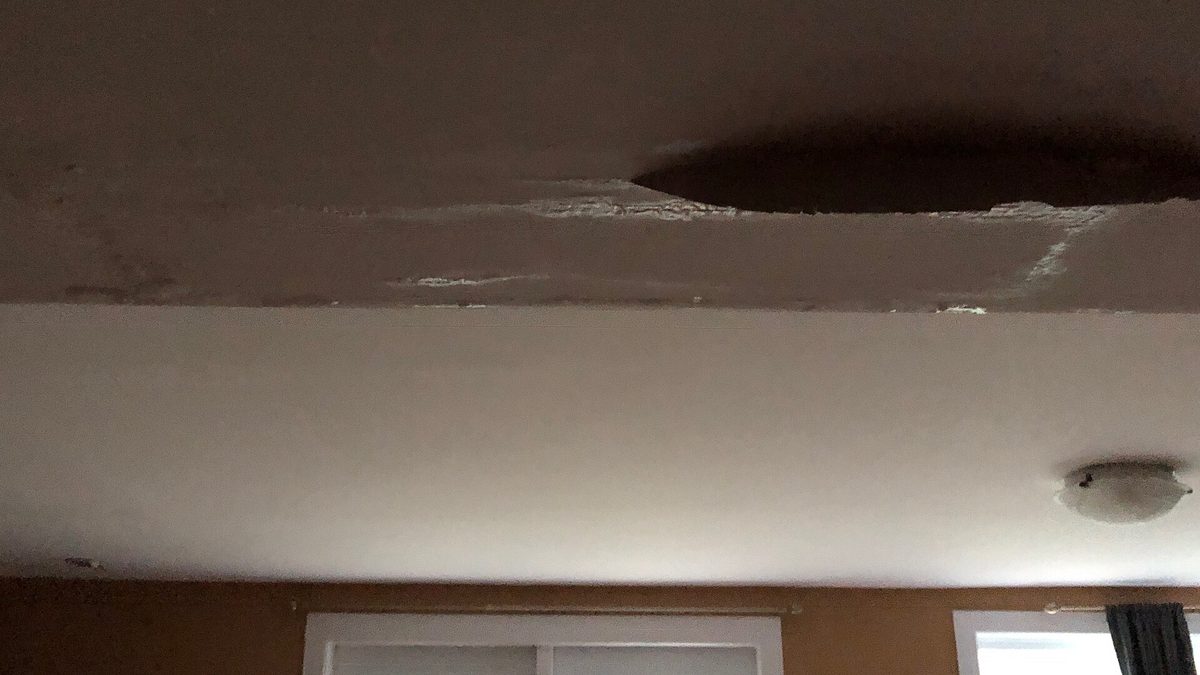
A bulge in a ceiling or wall means water is trapped behind it and adding weight. Leave the room if you see bulging, cracking, sagging drywall, or falling plaster, since the material can give way with little more warning.
Do not poke or press on a large bulge yourself. A bucket under a small, stable drip is fine if the material still feels firm; stay out from directly underneath a heavier one.
Does Black Water From a Leak Mean Sewage?
A sewage smell, a drip that starts when a toilet flushes or a sink or washer drains, or gurgling drains all point to a drain or sewer source. A steady drip that runs with the house quiet and comes with rust flakes points to pipe corrosion instead.
The CDC notes that a flooded house may be contaminated with mold or sewage, which can cause health risks for your family. The same caution applies to any dark drip you suspect could be sewage, not just a flood.
If the drip traces back to a floor drain, toilet, or a sewer line backing up rather than dripping from above, see our guide to a sewer backup in the basement for the fuller cleanup picture.
Rust, by contrast, usually has no smell and leaves metallic flakes rather than grit or waste. It still is not safe to touch, but the health risk is lower than with a drain-line source.
How Do You Trace Where the Black Drip Is Coming From?
Run one test at a time and watch the drip. A drip that starts when a fixture drains points to a drain or sewer line; a drip that keeps running with the house quiet points to a supply line, fixture, or pipe.
Check non-plumbing sources last: an AC condensate line, a dishwasher or washing machine drain, or attic condensation can all leak dark-tinted water into a ceiling or wall cavity.
These tests narrow the source; they do not replace the general ceiling leak steps for containing the drip while you work through them.
| Test | If the drip changes | Points to |
|---|---|---|
| Flush the toilet above or nearby | Drip gets worse or starts | Drain or sewer line |
| Run a sink or shower above the spot | Drip starts with the drain | Drain line |
| Run the washer or dishwasher | Drip starts during the drain cycle | Appliance drain or standpipe |
| Nothing used, drip keeps going | No change | Supply line, fixture, or pipe |
| Dripping only in hot weather, from an AC line | Stops when the AC is off | Condensate line |
If the drip is coming from a shared wall or the unit above you, document it with photos and notify the neighbor or building manager before you run any of these tests.
Which Valve Do You Shut Off, and in What Order?
Cut power first, then shut off the fixture or branch valve that feeds the drip. Close the main only if the drip keeps going or you cannot find the branch valve, and never run water to try to clear a dark line.
Most homes have a shutoff valve under each sink, behind the toilet, and at the washing machine and dishwasher supply lines. Closing the one valve for the right fixture can stop the drip without cutting water to the rest of the house.
If you cannot isolate the branch, or the drip is inside a wall or ceiling cavity you cannot reach, close the main shutoff valve for your whole home instead.
A sewer or drain-line blockage is sometimes a different call than a supply-line leak. The City of Greater Sudbury, for one example, lets residents either call the city for a contracted plumber or hire their own.
That city then decides reimbursement for the plumbing work by whether the blockage was in the city's part of the line or on the homeowner's own property. It is not responsible for reimbursing damage to your home or its contents. Check your own city's rule rather than assuming this one applies everywhere.
When Does Black Water Need Professional Cleanup?
Any dark drip that may be sewage, that touched floodwater, or that shows mold should go to a pro. Restoration standards place water from sewage and similar sources in the most serious water category, so ask your pro how they are classifying what you have.
The CDC warns that floodwater and standing water can be dangerous and can make you vulnerable to infectious diseases, which is part of why a drip that may carry sewage needs a different response than a clean supply-line leak.
The EPA's mold course materials note that their drying guidance was built around clean water, not flood water or sewage, so a contaminated drip calls for professional cleanup rather than just fans and towels.
Before cleanup starts, photograph the drip, the stain, and the water color with a timestamp. Do not drink or store a water sample; a timestamped photo is usually enough for a plumber or insurer.
If what started as a drip has turned into a running stream or a full pipe break, stop reading this article and follow the steps for when a pipe bursts instead.
How Fast Must the Wet Area Be Dried?
Dry the area within about 24 to 48 hours, starting with fans and open air, and pull out porous items that stay wet. Treat that window as a target, not a hard deadline, since mold can start before a surface even looks wet.
The EPA's brief guide to mold, moisture, and your home advises drying water-damaged areas and items within 24 to 48 hours to help prevent mold growth.
That guidance assumes clean water. If the drip may be sewage or floodwater, skip the fans-and-towels approach and let a water-damage pro assess and dry the area with the right equipment and protection.
Carpet, insulation, and drywall that stayed wet past that window, or that touched contaminated water at all, are usually easier to replace than to fully dry and trust again.
Who Do You Call First: a Plumber or a Water-Damage Pro?
Call a plumber first when the drip has a clear source you can shut off. Call a water-damage pro when the water may be sewage, has touched floodwater, sits in a ceiling or wall cavity, or shows mold. Many drips need both, in that order.
A plumber traces and stops the source: a branch valve, a corroded pipe section, or a drain-line repair. A water-damage pro dries the structure, checks for hidden moisture, and handles any contamination the plumber's fix leaves behind.
Keep your insurer in the loop too. Whether a dark drip from a drain or supply line is covered depends on your policy and its cause, so photograph everything and ask your insurer before cleanup; see whether insurance covers a burst pipe for how that general coverage question usually works.
This is general information, not legal or insurance advice. Always check your own policy.
When to call a professional
Call now, do not wait for morning, if any of these are true:
- You smell sewage, rot, or a sharp chemical odor near the drip.
- The water came from floodwater, rose from a drain or toilet, or touched your clothes or skin.
- You see visible mold, black fuzz, or a musty smell that is spreading.
- The water is within reach of a light, outlet, fixture, or any electrical part.
- The ceiling or wall bulges, sags, cracks, or sheds plaster, or standing water sits in the ceiling.
- The drip turns into a stream, spreads to other rooms, or keeps going after the valve is closed.
- The leak is in an upstairs unit or a shared wall, and the neighbor or building needs to know.
Frequently asked questions
Is black water from a ceiling always sewage?
No. Dark water can come from rusted old pipe, a dirty drain line, or water that picked up dirt on its way down. The color alone cannot confirm sewage. Treat it as possibly contaminated until a plumber or water-damage pro checks the source. A sewage smell or drain-triggered timing is a stronger sign than color alone.
Can I wipe up the dark water and keep using the room?
Not safely until the source is off and the area is checked. Wiping spreads contamination and can hide the color you need to report. Wear gloves, keep children and pets out, and avoid touching the wet ceiling or light fixtures. Cleanup with an N95 respirator and gloves is a job for a pro when sewage is possible.
Could a dishwasher or washing machine cause a black drip?
Yes. A drain hose, standpipe, or connection can leak into a wall or ceiling below a floor, and the water can pick up dark color from the drain path. Shut off the appliance's water supply and power before you inspect its hoses, and do not run the appliance to test it while the drip is active.
Should I collect a sample of the dark water?
A photo with a timestamp is usually enough for a plumber or insurer. If you do collect a sample, seal it in a clean container, label the location and time, keep it away from food and drinks, and do not taste it. Do not run the faucet to clear the color first. Keep the sample only until the pro has seen the site.
The drip stopped after I closed a valve. Is the leak fixed?
Not necessarily. A closed valve stops new water, but the wet materials, trapped water, and any contaminated residue remain. Keep the area dry, check it again after a few hours, and keep a pro in the loop. A drip that comes back after shutoff needs a plumber to trace it further.
Will my insurance cover a black water leak from a drain line?
It depends on the policy and the cause, so read your policy and ask the insurer before cleanup. Photos, the source, and the shutoff time all help the claim. This is general information, not legal advice, and your own policy's wording is what decides the answer.